Is the scent of sourdough and the bark of sea lions worth navigating a crush of five million annual visitors? When planning your trip, the question “should I go to Fisherman’s Wharf?” is likely at the top of your list. It’s natural to feel drawn to the postcard version of San Francisco, even if you fear the reality involves more souvenir magnets than authentic soul. You crave a sense of discovery, but you’re worried about wasting precious hours on flat, paved paths surrounded by overpriced, low-quality food.
This guide provides a clear perspective on whether the Wharf is worth your time or if you’re actually seeking the physical adventure of the city’s hidden topography. We’ll compare the commercial noise of the piers with the quiet exclusivity of San Francisco’s secret stairway hikes. You’ll learn how to trade the tourist crowds for an invigorating morning of hill climbing through residential backyards and historic neighborhoods. By the end, you’ll have a plan for a day that feels like a local’s secret rather than a commercial checklist.
Key Takeaways
- Decide “should I go to Fisherman’s Wharf?” by comparing the high-energy commercial hub of Pier 39 with the authentic, quiet soul of the city’s hills.
- Understand the physical and financial trade-offs of the waterfront, from overpriced menus to the fatigue of walking on flat concrete.
- Explore the philosophy of earning your perspective through elevation and discovering residential paths that cars simply can’t reach.
- Map out a balanced itinerary that pairs an invigorating early morning Stairway Walk with the city’s most iconic landmarks.
Should I Go to Fisherman’s Wharf? Deciphering the San Francisco Postcard
Asking “should I go to Fisherman’s Wharf?” is the San Francisco equivalent of wondering if you should visit Times Square. It’s a high-energy commercial hub centered on Pier 39 and Ghirardelli Square, serving as the city’s most recognizable face. If you’re traveling with kids who need a sea lion fix or if you’ve always dreamed of that classic “postcard” shot with a sourdough bowl in hand, the answer is a qualified yes. This is what we call “Horizontal SF.” It’s flat, paved, and designed for maximum ease, providing a curated version of the city’s maritime history.
However, there’s a distinct difference between the commercial piers and the authentic pulse of the city. While the Wharf offers a convenient loop of shops and attractions, it often trades local character for tourist convenience. It’s an excellent starting point for those who want the highlights without the sweat, but it barely scratches the surface of the city’s true topography. If you’re looking for a deeper connection to the landscape, you’ll eventually need to turn your gaze toward the hills.
The Local’s Perspective: Why We (Mostly) Stay Away
For those of us who live here, the Wharf represents a specific kind of sensory overload. The enticing smell of fresh sourdough often competes with the dense crush of five million annual visitors. It’s a “Disney-fication” of our waterfront that feels worlds away from the quiet, leafy paths of residential San Francisco. We don’t hate it; we just find it predictable. The one undeniable highlight we still love? The sea lions at Pier 39. Their chaotic barking and sun-soaked lounging remain a genuine, unmanufactured joy that even the most jaded local can’t help but appreciate.
The First-Timer’s Dilemma: FOMO vs. Reality
If you’re still wondering “should I go to Fisherman’s Wharf?” consider the weight of the “rite of passage.” There is a certain satisfaction in tearing into a bread bowl while watching the fog roll past Alcatraz. It’s a checklist item for a reason. Just go in with your eyes open. Fisherman’s Wharf is a curated maritime museum that prioritizes commerce over community. It’s a fun performance, but it isn’t the whole story. Once you’ve had your fill of the horizontal waterfront, the real adventure begins where the pavement starts to tilt upward.
Beyond Pier 39: What You Gain (and Lose) at the Waterfront
Convenience is the primary currency of the waterfront. It’s easy to navigate, easy to find, and requires very little planning. But this ease comes with a hidden tax on your experience. When weighing the question “should I go to Fisherman’s Wharf?” it’s vital to consider what you’re leaving on the table. The Waterfront is built for speed and sales, not for storytelling or authentic connection. It’s a neighborhood designed for visitors, which means the local soul is often buried under layers of commercial polish.
Walking the flat, concrete expanse of the Embarcadero might save your quads, but it starves your curiosity. There’s a repetitive nature to the souvenir shop architecture that pales in comparison to the historic, weathered charm of San Francisco’s residential districts. While the Wharf offers mass-produced trinkets, the hills offer a living history of Victorian craftsmanship and botanical surprises that cars simply can’t access. The physical toll of the Wharf is a dull fatigue; the toll of the hills is an invigorating burn that rewards you with a fresh perspective.
The “Tacky” Factor: From Mirror Mazes to Wax Museums
Mirror mazes, wax museums, and “odditoriums” provide a predictable loop of entertainment. These attractions are global templates. They could exist in London, Orlando, or Branson just as easily as they do here. They don’t speak to the unique soul of the city. San Francisco’s true character isn’t found behind a velvet rope or under a neon sign. It’s etched into the steep, secret paths that define our actual geography, far from the manufactured thrills of the piers.
The High Cost of a Bread Bowl
The iconic sourdough bowl is a rite of passage, but it’s often served with a side of sticker shock. Tourist menus are designed for one-time visitors, which rarely incentivizes culinary excellence. Then there’s the “parking trap.” Driving to the Wharf is a logistical nightmare where garage fees can easily eclipse the cost of your lunch. You’ll find much better value by earning your calories on neighborhood history tours that end at local-favorite eateries away from the crowds.
If you’re still debating “should I go to Fisherman’s Wharf?” remember that the most rewarding stories are rarely found at sea level. Trade the flat pavement for the vertical city to discover what makes San Francisco truly incomparable.

The Vertical Alternative: Why Stairway Walks Offer a Superior Perspective
If you’re still debating “should I go to Fisherman’s Wharf?”, consider what you actually want from your journey. The city’s true magic isn’t found at sea level; it’s hidden in the elevation. We believe the best views are earned through effort. Trading the flat, predictable pavement of the waterfront for the steep, secret paths of the hills transforms your trip from a passive tour into an active discovery. While the Wharf offers a performance of the city, the stairway hikes reveal its reality.
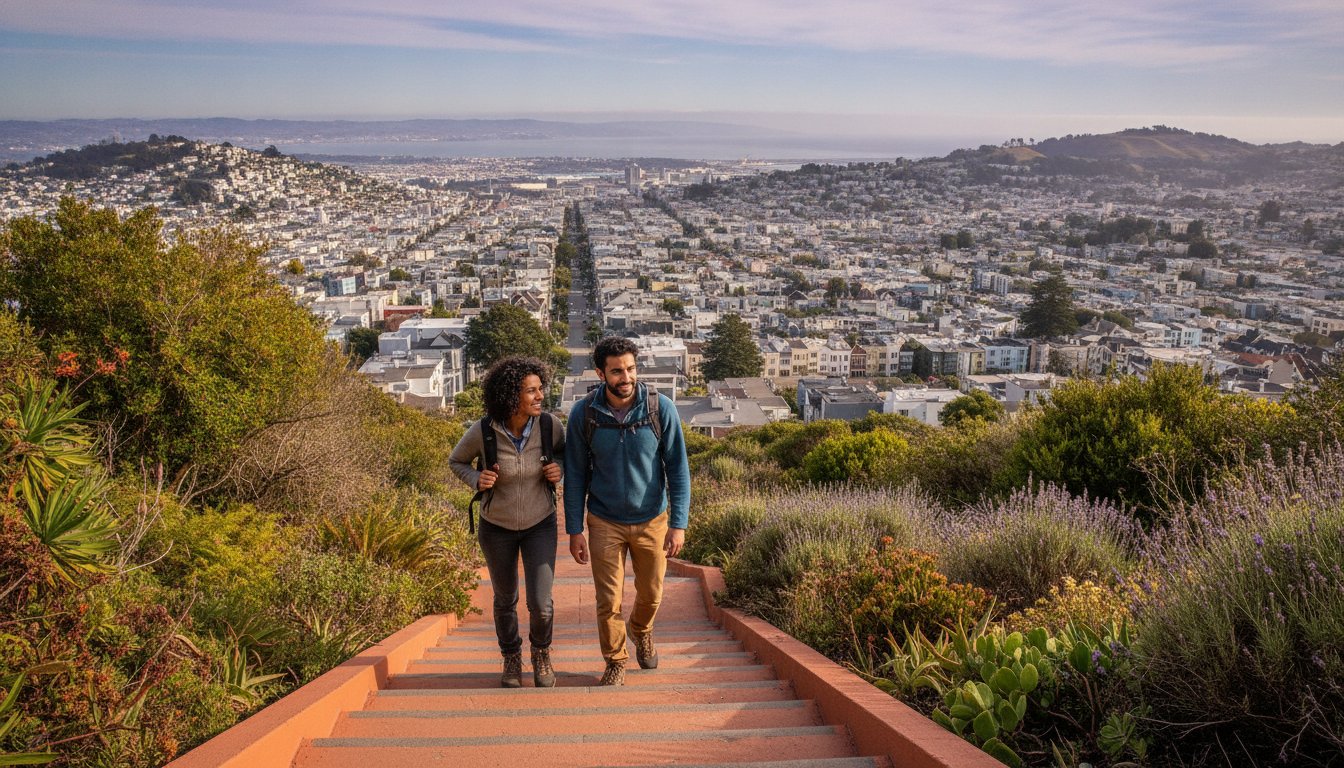
The city demands movement. Climbing these hidden paths provides a cardiovascular challenge that flat-land tourists simply miss. Instead of the constant noise of street performers and crowds, you’ll find the quiet contemplation of a hidden garden stairway. These routes offer a sense of quiet exclusivity, where the only sounds are your own footsteps and the occasional rustle of a resident’s private garden. It’s an antidote to the commercial chaos of the piers.
Fitness with a View: The Urban Hike Experience
Climbing the city’s steepest secret paths provides an invigorating rush that no mirror maze can match. We define an urban hike as a sophisticated blend of cardiovascular challenge and architectural discovery. It turns your morning exercise into a curated journey through the city’s unique topography. You aren’t just walking; you’re conquering the terrain that defines the San Francisco spirit. The reward for every step is a panoramic perspective that feels personal and earned.
Residential Backyards vs. Souvenir Shops
Instead of mass-produced magnets, you’ll see how San Franciscans actually live. These stairway walks take you through residential paths that cars can’t reach, offering glimpses into private backyards and historic Victorian homes. You’ll uncover local lore and architectural details that big bus tours always miss. It’s a chance to see the city through a refined, localized lens, focusing on the intersection of geography and history. The charm of a weathered wooden gate or a blooming hillside terrace beats a neon sign every time.
While the answer to “should I go to Fisherman’s Wharf?” might be a hesitant yes for those who love kitsch, the adventurous soul belongs on the hills. Ready to skip the crowds and find a better view? Book one of our Stairway Walks to see the city from the top down and get your heart rate up before the fog rolls in.
Planning Your Perfect SF Day: Balancing Icons with Urban Hikes
You don’t have to choose between the landmarks and the local experience. A successful day in the city is all about the sequence. If you’re still asking “should I go to Fisherman’s Wharf?” the best answer is to treat it as a short, strategic chapter rather than the main event. Start your morning where the city’s heart actually beats: on the steep, quiet inclines of the residential hills. Once you’ve conquered the stairs, the flat waterfront feels like a victory lap rather than a chore.
Follow this balanced itinerary to maximize your time and energy:
- Rise with the hills. Begin with an early Stairway Walk to beat the fog and the heat. It’s the best way to wake up your body and see the city before the commercial machine starts turning.
- The Sea Lion Sprint. Once you’ve earned your views, head down for a quick visit to the barking residents of Pier 39. See them, hear them, and then move on before the crowds peak.
- The Local Lunch. Skip the overpriced waterfront menus. Your guide will point you toward a neighborhood favorite where the sourdough is just as fresh but the atmosphere is authentically local.
- Ditch the Keys. Avoid the parking garages at all costs. The fees are predatory and the traffic is a logistical nightmare. Use the historic F-line streetcar or simply keep moving on your own two feet.
Morning Hikes & Afternoon Rewards
Climbing stairs at 8:00 AM is better than any double espresso. It primes your body for the day and offers a sense of accomplishment before most tourists have even finished breakfast. High elevation spots offer views of the Golden Gate Bridge that feel private and earned. You get the iconic sight without the elbow-to-elbow struggle of the lower piers. By the time you reach the Wharf, you’ve already seen the “real” San Francisco from above.
City Drifts: The Authentic Adventure
We believe in depth over surface. Our tours are designed for the urban explorer who wants to “do” San Francisco differently. We keep our groups small to ensure a sophisticated, storytelling-driven approach that balances physical vitality with cultural curiosity. It’s an invitation to see the city through the eyes of a trusted curator who knows the secret paths cars can’t reach. Stop wondering “should I go to Fisherman’s Wharf?” and start planning a journey that actually moves you.
Book your invigorating San Francisco stairway tour with City Drifts today.
Elevate Your San Francisco Narrative
San Francisco is a city of layers, and the most rewarding ones aren’t found at sea level. Deciding “should I go to Fisherman’s Wharf?” is about choosing between a commercial performance and an authentic, physical discovery. While the sea lions and sourdough have their place, the true soul of the city is etched into the steep stairways and hidden garden paths that define our actual geography. You don’t have to settle for the flat concrete of the waterfront when you can earn a panoramic perspective through the city’s residential backyards.
Trade the crowds for a curated journey that challenges your body and feeds your curiosity. Our invigorating, fitness focused routes take you where big buses and cars simply can’t reach. Led by expert local storytellers, these walks prioritize architectural depth over souvenir shops. It’s time to turn your sightseeing into a transformative urban adventure that captures the spirit of the hills.
Explore the real San Francisco on a guided stairway hike with City Drifts.
Step away from the tourist loop and start your climb. The best version of this city is waiting for you at the top of the next flight.
Frequently Asked Questions
Is Fisherman’s Wharf a tourist trap?
Fisherman’s Wharf is a curated maritime museum that prioritizes commerce over community. When asking “should I go to Fisherman’s Wharf?” consider if you value manufactured thrills over authentic discovery. It’s an excellent spot for families and those who love kitsch, but it lacks the rugged, residential charm found on the city’s hidden hillsides.
What are the best alternatives to Fisherman’s Wharf for locals?
Locals prefer the “Vertical SF” experience found on hidden stairway walks. These routes reveal the city’s secret gardens and historic Victorian architecture that standard tourist maps overlook. Trading the flat pavement for a steep climb provides an invigorating morning of exercise and a fresh perspective on the landscape.
How much time should I spend at Fisherman’s Wharf?
A strategic visit of one to two hours is usually sufficient. This timeframe allows you to witness the sea lions and experience the high-energy atmosphere without the fatigue of the “parking trap” or the sensory overload of the crowds. Use the saved hours to conquer a neighborhood history tour instead.
Can I see the sea lions without going to Pier 39?
The massive colony at Pier 39 is the only place to see hundreds of sea lions in one spot. While you might spot a rogue traveler near Pier 35, the K-Dock is the undisputed heart of the action. It’s a genuine, unmanufactured joy that remains a highlight even for those who prefer the quiet of the hills.
Are San Francisco stairway tours difficult for beginners?
Our stairway walks are an invigorating blend of fitness and discovery designed for anyone with a love for walking. The terrain is steep and the climbs are real, but the pace is methodical. You’ll find that the cardiovascular challenge is perfectly balanced by the storytelling elements of the residential neighborhoods.
What is the best way to avoid crowds in San Francisco?
The best strategy is to start early and go where the cars can’t follow. By choosing an urban hike through the city’s vertical paths, you leave the five million annual waterfront visitors behind. Elevation is the ultimate antidote to the crowds, offering quiet exclusivity and panoramic views that feel entirely personal.