If you think the best way to experience Ruth Asawa in San Francisco is by standing in a silent museum gallery, you’re only seeing half the story. You want more than a standard tourist brochure; you want the burn of a steep climb and the reward of a hidden masterpiece tucked away in a residential plaza. It’s frustrating to follow a flat map only to realize you’ve missed the soul of the work because you didn’t see the rugged landscape that inspired it.
This guide turns your cultural curiosity into an invigorating urban adventure. You’ll discover a curated list of Asawa’s public works while navigating the legendary stairways and hills that the “Fountain Lady” herself once called home. We’ll preview the essential stops for her 2026 centennial, including the new permanent space opening at the Minnesota Street Project, and provide a route that challenges your legs as much as it inspires your mind. Get ready to see the city through the eyes of its most iconic artist, one step at a time.
Key Takeaways
- Celebrate the 2026 centennial by visiting the brand-new permanent exhibition space at the Minnesota Street Project in the Dogpatch.
- Locate the “Andrea” mermaid fountain and the Japantown Origami fountains to experience the best of Ruth Asawa in San Francisco for free.
- Turn your cultural tour into a heart-pumping workout by following our specific route from Noe Valley to the Castro via hidden neighborhood stairs.
- Learn why the steep residential hills and “backyard” perspectives were essential to Asawa’s organic wire sculpture designs.
Why 2026 is the Year of Ruth Asawa in San Francisco
The year 2026 marks the centennial of a woman who didn’t just live in the city; she wove its very essence into her art. Celebrating 100 years of the “Fountain Lady” means looking past the bronze and wire to see the woman who fought for arts education in every neighborhood. If you’ve ever watched the heavy summer fog snag on a cypress branch or admired the tangled geometry of a coastal succulent, you’ve seen the Ruth Asawa in San Francisco aesthetic in its natural state. Her sculptures don’t just sit in galleries. They mimic the organic chaos of the Bay Area’s flora and the rhythmic curves of its hillsides.
Ruth Asawa’s work serves as the connective tissue of San Francisco, weaving the city’s rugged topography and communal spirit into a singular, enduring soul.
The Minnesota Street Project Expansion
On May 9, 2026, the city gains a new cultural anchor. The Ruth Asawa Lanier estate is opening a permanent, 1,714-square-foot exhibition space within the Minnesota Street Project. Located in the Dogpatch, this gallery offers a rare look at intimate works that have spent decades away from the public eye. It’s the perfect staging ground for an urban trek. The Dogpatch’s flat, industrial blocks provide a gentle warm-up before you tackle the grueling inclines of nearby Potrero Hill. You’ll find the space open Tuesday through Saturday, from 11:00 AM to 4:00 PM; it acts as both a museum and a tribute to her tireless advocacy for student artists.
From Black Mountain to the Bay
The journey of Ruth Asawa is a testament to resilience and vision. She moved from the trauma of Japanese American internment to the experimental grounds of Black Mountain College. Under the mentorship of Josef Albers, she mastered the “continuous line” philosophy. This wasn’t just a technical skill; it became her life’s work. She saw the world as a series of interconnected loops. When you stand at the top of a steep San Francisco stairway and look at the winding streets below, you’ll see exactly what she saw. The legacy of Ruth Asawa in San Francisco mirrors the city’s switchbacks and the relentless, beautiful struggle of climbing its peaks.
The Hidden Public Art Trail: Beyond the Hyatt Fountain
Most visitors stop their search at the famous bronze “San Francisco Fountain” near Union Square. While that piece is a marvel of local storytelling, it’s only the starting line. To truly find Ruth Asawa in San Francisco, you have to lace up your boots and head for the waterfront and the residential hills. Her public commissions are scattered like breadcrumbs across the city’s historic squares and quiet campuses, often requiring a steep climb to reach them. These works aren’t just decorations; they’re landmarks of community persistence and personal history.
Ghirardelli Square: The Mermaid’s Tale
At the west end of the square sits “Andrea,” a nursing mermaid surrounded by sea life. It’s a masterpiece of grit. When it was commissioned in 1966, local critics found the subject matter scandalous and the design too traditional. Asawa didn’t flinch. She fought for the installation, and today it stands as a testament to her resolve. You can see the physicality of the bronze casting process in every textured scale and ripple. Pro-tip: After you’ve powered through the grueling climb from the Embarcadero, head to the upper terrace of the square. This vantage point offers the best photo angle to capture the fountain against the backdrop of the Bay.
Japantown: Geometry in the Fog
Contrast the organic curves of the mermaid with the sharp precision of the Origami Fountains at Buchanan Mall. These geometric forms reflect her Japanese heritage and her obsession with paper folding as a teaching tool. They provide a stark, beautiful contrast to the looped wire work found in major collections like the Cantor Arts Center. This stop is a vital checkpoint on an urban hike that connects the lowlands of the Fillmore to the heights of Pacific Heights. If you want to find these neighborhood secrets without staring at a phone, our stairway walks turn these art stops into a high-elevation workout.
The trail continues with several lesser-known gems that reward the curious explorer:
- The Garden of Remembrance: Located at SF State, this space uses boulders from internment camps to create a contemplative sanctuary.
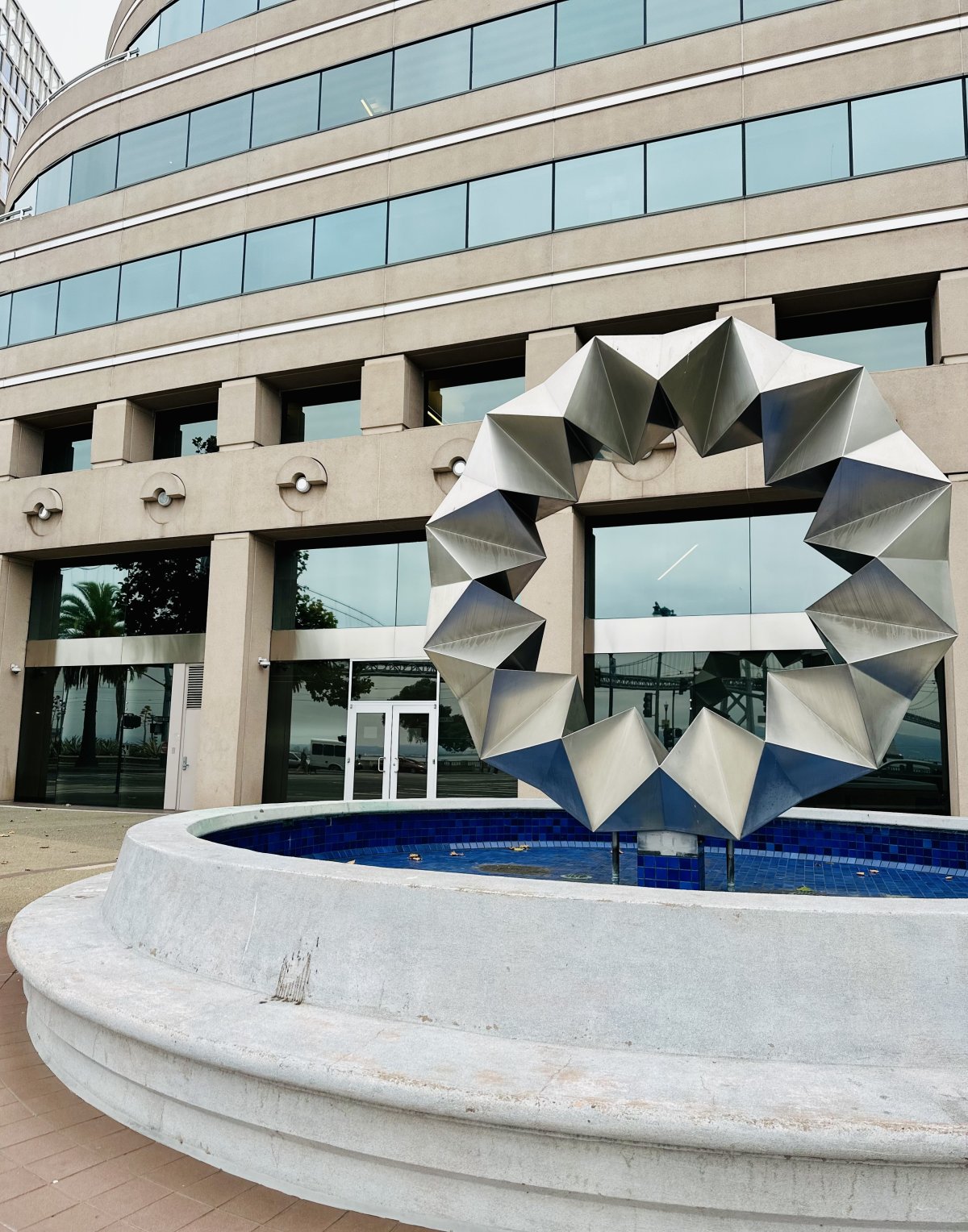
- Aurora: This stainless steel fountain on the Embarcadero mimics the movement of light and water.
- The Doors of Noe Valley: Look for residential treasures where her intricate designs are integrated into the very fabric of the neighborhood.
Exploring these sites on foot allows you to appreciate the scale of her impact. You aren’t just looking at art; you’re navigating the same steep grades and “backyard” perspectives that fueled her creative engine for six decades.
Hiking the Asawa Legacy: A Noe Valley to Castro Route
To truly understand the work of Ruth Asawa in San Francisco, you must leave the flat pavement of the Embarcadero behind and head for the heights. Her longtime residence in Noe Valley wasn’t just a home; it was a high-altitude studio where her famous wire sculptures hung from the ceilings in clusters, mimicking the morning mist that rolls over the peaks. This neighborhood serves as the trailhead for an urban hike that bridges her personal sanctuary with the vibrant streets of the Castro below. A sharp, rhythmic burn ignites your quads as you reach the Noe Valley overlooks, a physical reminder of the terrain that dictated Asawa’s looped wire forms.
Step 1: The Noe Valley Ascent
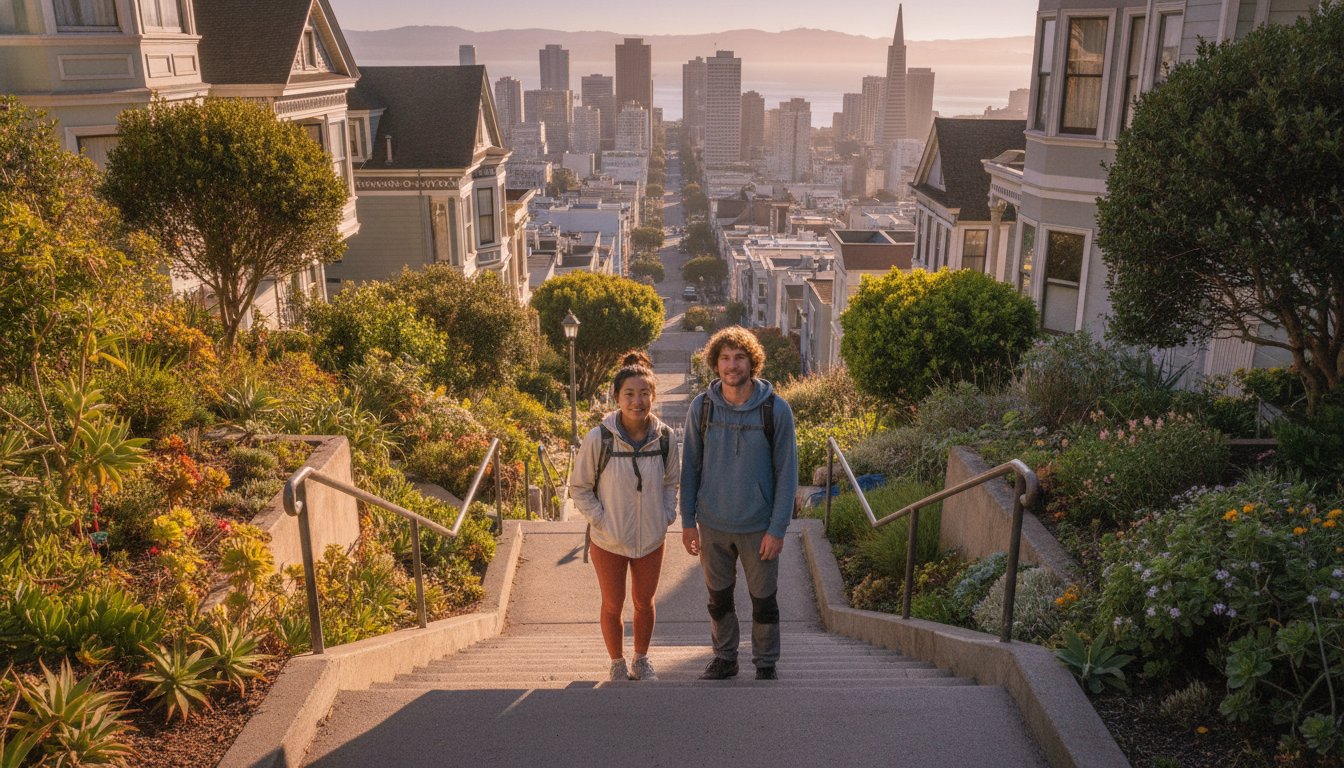
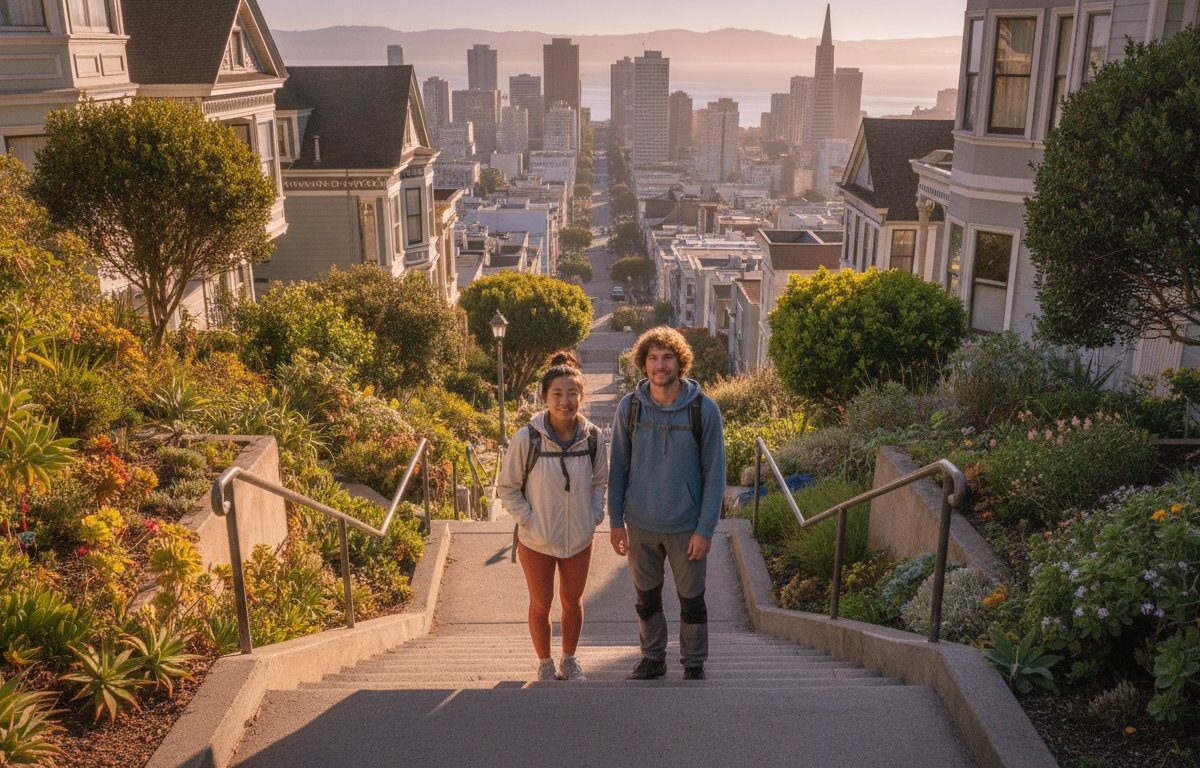
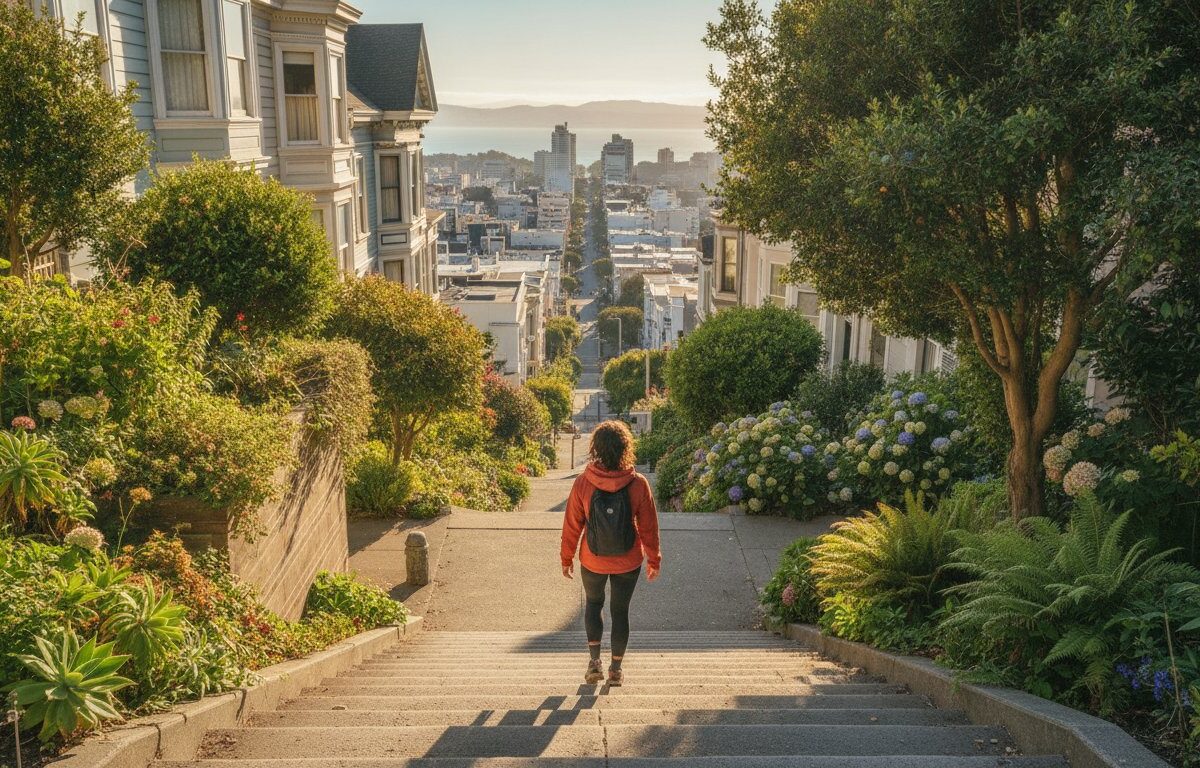
Begin your trek near the intersection of Castro and 22nd Street. This isn’t your average stroll; it’s an invigorating climb through some of the city’s most exclusive residential “backyards.” As you navigate the hidden paths and public easements, keep your eyes peeled for the intricate wire work and organic garden designs that local residents have maintained in her honor. Tourists usually miss these private tributes, but for the urban hiker, they’re the ultimate reward. This route offers the perfect early morning exercise, trading the stale air of a gym for the crisp, eucalyptus-scented breeze of the hills. If you want to master these vertical shortcuts with a local guide, our stairway walks turn this grueling ascent into a curated discovery of hidden history.
Step 2: The Stairway Shortcuts
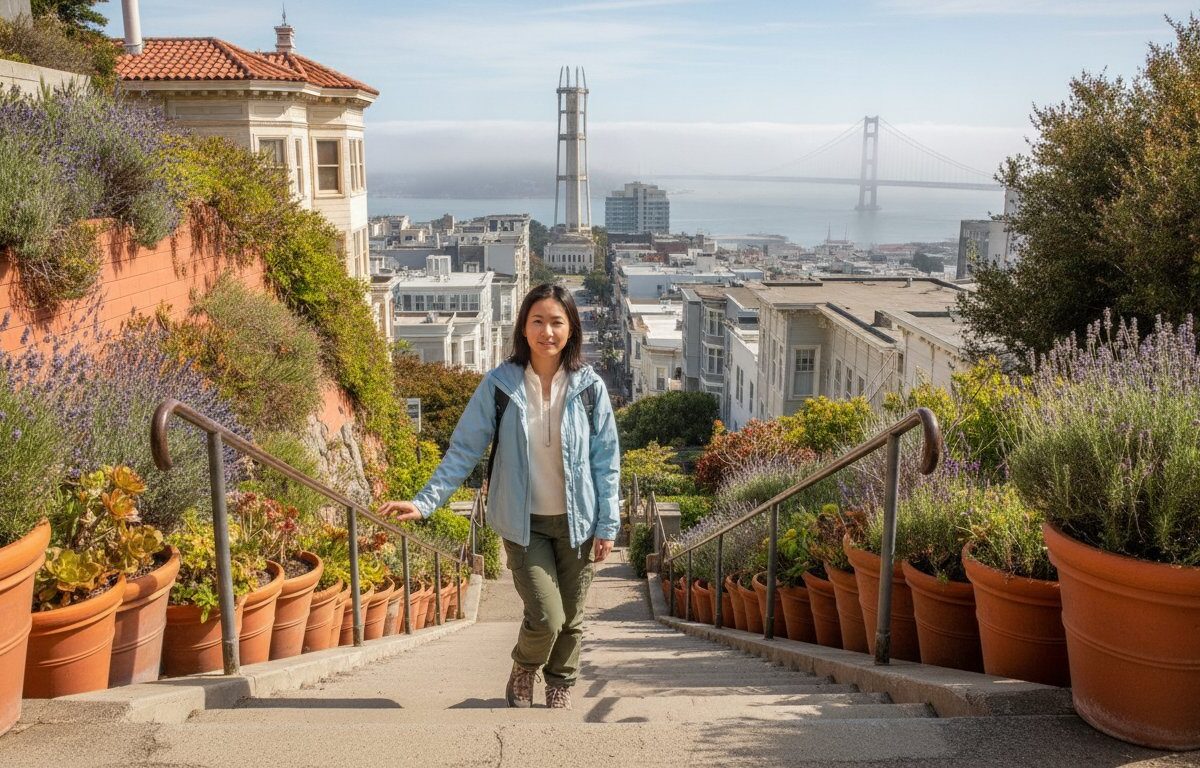
If you’ve already explored the digital map on Ruth Asawa’s Public Art Tour, you’ll know her influence is woven into the very fabric of the city. As you descend toward the Castro, look for “Asawa-esque” patterns in the wrought iron fences and the interlocking timber of local garden architecture. The descent via the secret stairways provides a psychological shift from the quiet contemplation of the heights to the energetic pulse of the valley. Reaching the summit at a nearby lookout offers a sense of mastery over the local terrain that no museum visit can replicate. Once you hit the bottom, reward your efforts with a dark roast at a local Castro staple like Spike’s Coffee and Teas. It’s the perfect spot to sit, reflect on the vistas you’ve just conquered, and watch the city move through the same streets that inspired a legend.
Elevate Your Perspective with City Drifts
Standing in front of a glass case is one thing; feeling the breeze that whipped through Ruth Asawa’s Noe Valley garden is quite another. While galleries provide a silent sanctuary for her wire loops, a guided urban hike offers the grit and elevation that actually birthed them. We believe the best way to honor the legacy of Ruth Asawa in San Francisco is to move through the city with the same vigor she did. Our “Stairway Walks” trade the hushed museum shuffle for a heart-pumping ascent through hidden passages and residential backyards.
To celebrate the 2026 Centennial, we’ve mapped out exclusive “Asawa Centennial” routes. These paths connect her public fountains with the secret stairways that define the city’s topography. You’ll gain a localized lens on her history while earning every single view. It’s a sophisticated blend of physical vitality and cultural study, curated for those who value depth over surface-level attractions.
Not Just a Tour, an Adventure
City Drifts is built for the active explorer. We focus on getting your morning exercise with a side of sharp, pithy storytelling. By keeping our groups small, we avoid the “big bus” tourist traps and gain access to the quiet, residential corners where the real soul of the city lives. You’ll see the “backyard” perspectives that tourists miss while tackling some of the steepest grades in the West. Before you join us, make sure to pack the urban hiker’s essentials:
- Layered clothing: San Francisco’s microclimates change with every 100 feet of elevation.
- Supportive footwear: Those legendary stairs require more than just fashion sneakers.
- Water and a sense of wonder: The climbs are steep; the stories are even deeper.
Book Your 2026 Stairway Walk
Don’t settle for a flat map and a boring afternoon. Whether you’re a local looking to rediscover your own neighborhood or a visitor craving an authentic challenge, our “Neighborhood History Tours” offer a refreshing perspective on the city’s most iconic artist. You can explore our upcoming tour schedule to find a date that fits your pace. We promise an invigorating journey through the hidden neighborhoods that locals cherish. Your legs will thank you, and your Instagram will too.
Claim Your View of the Centennial
San Francisco’s hills aren’t just obstacles; they’re the blueprints of an artistic legacy. By tracing the work of Ruth Asawa in San Francisco through its secret stairways, you’ve moved beyond the gallery walls to see the city as she did. You’ve discovered the significance of the 2026 centennial celebrations and identified the invigorating routes that connect her Noe Valley sanctuary to the bronze landmarks of the waterfront. This journey isn’t just about art; it’s about the physical satisfaction of mastering the city’s most challenging terrain.
Finding these hidden gems requires more than a standard map. It requires an expert eye for neighborhood history and a love for the steep climb. As a top-rated urban hiking experience for fitness enthusiasts, we’ve been featured in local SF culture guides for our commitment to authentic, off the beaten path discovery. We’ve done the legwork to find the most rewarding paths so you can focus on the burn and the beauty of the “backyard” perspective.
Book your San Francisco Stairway Tour and discover Asawa’s legacy on foot. Lace up your boots and prepare to see the city from a higher perspective. Your next adventure is just a few hundred steps away.
Frequently Asked Questions
Where is the best place to see Ruth Asawa’s art in San Francisco?
The best places to see the work of Ruth Asawa in San Francisco are the public plazas where her monumental fountains reside. You can find “Andrea” at Ghirardelli Square or visit the “San Francisco Fountain” near Union Square. For a deeper look at her wire sculptures, the new permanent space at the Minnesota Street Project in the Dogpatch is essential. These outdoor sites let you experience her art within the city’s living topography.
Is the Ruth Asawa Centennial exhibition at Minnesota Street Project permanent?
Yes, the exhibition space at 1275 Minnesota Street is a permanent extension of the Ruth Asawa Lanier estate. It officially opens on May 9, 2026, and operates Tuesday through Saturday from 11:00 AM to 4:00 PM. While the inaugural exhibition “Ruth Asawa: Untitled” runs through June 20, 2026, the gallery itself remains a lasting home for her legacy. It’s a vital cultural anchor for the Dogpatch neighborhood and a perfect starting point for explorers.
How difficult are the stairway walks associated with Ruth Asawa’s neighborhood?
These walks are moderately challenging and designed to get your heart rate up. Navigating the secret stairways of Noe Valley and the Castro requires a steady pace and a willingness to tackle steep vertical climbs. You’ll encounter hundreds of steps, but the reward is a “backyard” perspective on the city that standard tours miss. It’s an invigorating morning workout that trades a boring treadmill for the most beautiful vistas in the Bay Area.
Can you visit Ruth Asawa’s former home in Noe Valley?
The longtime home and studio of Ruth Asawa in San Francisco remains a private residence, so you cannot go inside. However, you can certainly appreciate the exterior and the surrounding gardens that fueled her creative engine. Hiking through these quiet residential streets offers a glimpse into the environment where her “ceiling sculptures” were born. It’s a contemplative stop on an urban trek that highlights how the local landscape influenced her organic wire designs.
What are the most famous Ruth Asawa fountains in San Francisco?
Her most iconic public works include the “San Francisco Fountain” at the Grand Hyatt, the “Andrea” mermaid fountain at Ghirardelli Square, and the geometric Origami Fountains in Japantown. Don’t miss “Aurora” on the Embarcadero or the contemplative “Garden of Remembrance” at SF State. Each piece reflects a different facet of her heritage and her mastery of materials. These fountains have earned her the affectionate local title of the “Fountain Lady” across the city.
What should I wear for an urban hike to see Ruth Asawa’s public art?
Dress in versatile layers to handle San Francisco’s unpredictable microclimates. You might start in the fog of the Dogpatch and end in the sun-drenched Castro. Most importantly, wear supportive athletic shoes with good grip. Those historic concrete stairs can be slick and the inclines are no joke. A small daypack for water and a camera is essential for this blend of fitness and culture. You’ll want to be prepared for both a workout and a photo op.