San Francisco isn’t a city you simply visit; it’s a vertical terrain you summit, often while passing through three distinct seasons in a single afternoon. Learning how to dress for San Francisco weather is less about following a fleeting trend and more about mastering a survival strategy for the active urban explorer. You’ve likely felt the sting of the marine layer while ascending a hidden stairway, or perhaps you’ve found yourself overheating during a steep climb only to shiver at the windy crest. It’s a common struggle to find the balance between high-performance fitness gear and a sophisticated style that avoids the typical tourist cliches.
We agree that navigating these sudden temperature shifts requires more than just a heavy coat. This guide promises to help you master the art of the microclimate, ensuring you stay prepared for a three-hour urban hike through the city’s most challenging hills. You’ll discover how to build a versatile wardrobe using the latest 2026 trends, from moisture-wicking merino wool to the practical stability of chunky sneakers. We’ll preview how to layer for both the physical exertion of the climb and the quiet contemplation of a neighborhood eatery, giving you total mastery over the local terrain.
Key Takeaways
- Understand why a standard forecast fails and how to prepare for sudden temperature drops of up to 15 degrees as the marine layer rolls across the hills.
- Master how to dress for San Francisco weather by adopting a three-layer system specifically designed to handle the sweat-to-shiver cycle of steep stairway climbs.
- Prioritize traction and stability with current chunky sneaker trends to navigate hidden, often slippery, residential paths and secret stairways with confidence.
- Learn to balance high-performance fitness gear with a refined urban aesthetic that transitions seamlessly from a vigorous morning ascent to a local neighborhood bistro.
Decoding the San Francisco Microclimate: Why Your Weather App is Lying
Your smartphone might promise a pleasant 68 degrees, but San Francisco rarely operates as a single atmospheric unit. It’s a 7×7 mile grid of unpredictable temperature pockets where geography dictates your comfort. When you’re learning how to dress for San Francisco weather, you have to account for the city’s dramatic topography. These steep hills act as massive wind barriers, creating a patchwork of environments. One block serves as a sunny, stagnant sanctuary while the very next street functions as a high-velocity wind tunnel.
The local phenomenon famously known as “Karl the Fog,” or the Marine Layer, is the primary architect of this confusion. This dense wall of mist can roll through a neighborhood and drop the temperature by 15 degrees in mere minutes. It turns a balmy afternoon into a shivering, damp evening before you’ve even finished your coffee. We follow a simple golden rule for any urban hike: if your path offers a clear view of the Pacific Ocean, you need a protective shell. If you’re tucked into a valley surrounded by Victorian houses, you might be fine in a t-shirt. Understanding San Francisco’s climate means recognizing that the city is a collection of dozens of distinct, shifting environments.
The Marine Layer vs. The Sun
The Marine Layer is a cold, dense air mass that originates over the Pacific Ocean and dominates the local skyline. Its daily cycle is a rhythmic “burn off” that dictates your layering choices. Mornings are typically misty and damp, requiring a solid outer layer. Afternoons can be deceptively bright as the fog retreats to the coast. However, by the time the sun dips, conditions return to an arctic chill. Don’t be fooled by a “sunny” forecast. In this city, that label usually only applies to the Mission District, which stays shielded while the rest of the city remains under a grey blanket.
Wind Chills on the Stairways
Elevation changes on a City Drifts tour expose you to coastal gusts that simply don’t exist at street level. There is a significant difference between the static air temperature in a sheltered residential backyard and the wind-exposed temperature on summits like Telegraph Hill or Twin Peaks. As you ascend our famous stairways, you move through different thermal layers. This is why a scarf is the most underrated piece of equipment for an urban explorer. It provides immediate, lightweight protection against the sudden drafts that whip through the city’s vertical corridors, keeping you warm without the bulk of a heavy parka.
The Exertion Equation: Dressing for 400+ Stairs
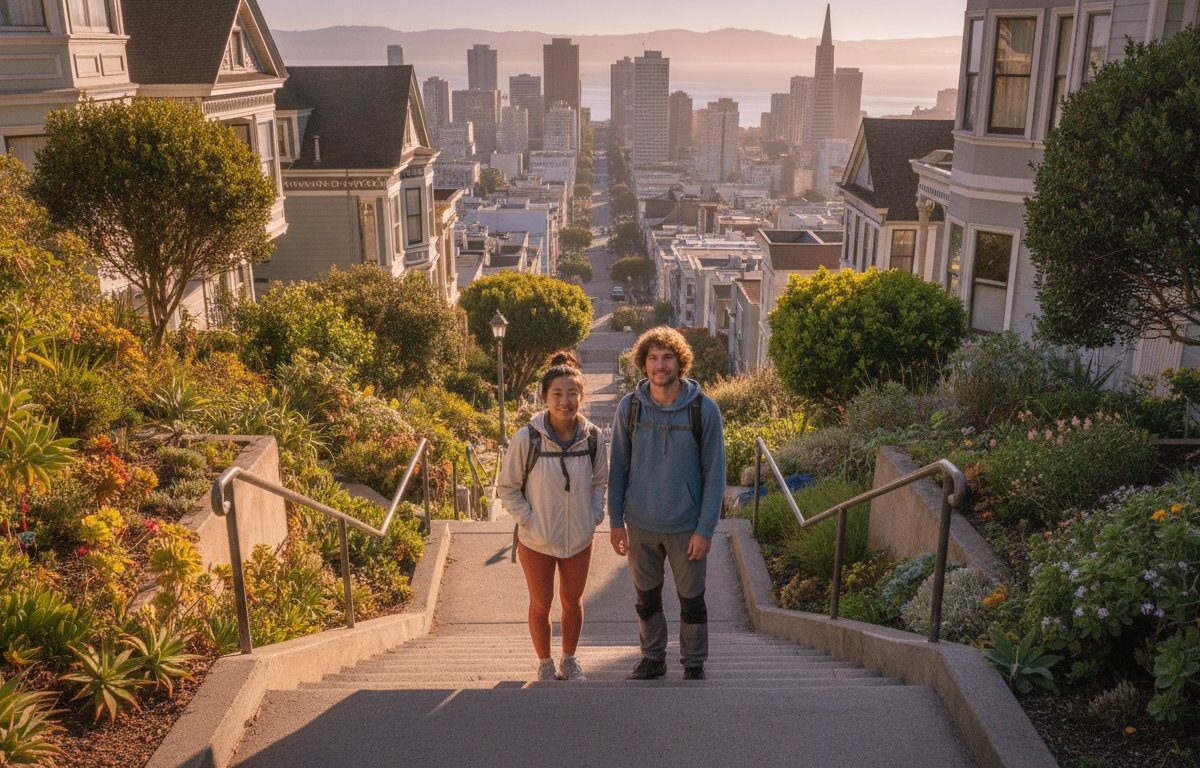
Most visitors mistakenly view San Francisco as a series of leisurely strolls between landmarks. In reality, exploring this city properly requires an “urban hike” mindset. When you’re tackling the Filbert Street Steps or the hidden paths of Pemberton Place, you aren’t just walking; you’re engaging in a vertical workout. Understanding how to dress for San Francisco weather means solving a specific exertion equation: how to stay cool while climbing 400 steps without freezing the moment you reach the summit.
This creates what locals call the sweat-to-shiver cycle. During the ascent, your body generates significant thermal heat. You’ll feel tempted to strip down to a t-shirt as you navigate the lush, sheltered backyards of Telegraph Hill. However, the second you crest the ridge and meet the Pacific breeze, that dampness turns into an immediate, bone-deep chill. Preparing your wardrobe for this physical challenge is the first step toward enjoying one of our active stairway walks through the city’s hidden corridors.
Materials matter more than style here. Heavy cotton is the absolute enemy of the stairway scout. It absorbs perspiration, stays heavy, and refuses to dry in the humid coastal air. While the National Weather Service provides data on San Francisco’s complex microclimates, they don’t account for the internal heat you generate when tackling vertical terrain. Opt for synthetic blends or merino wool that move moisture away from your skin.
Managing Body Heat on the Incline
Your base layer should be a high-performance, moisture-wicking fabric that prevents a “damp-chill” once your heart rate settles. Zippers are your best friend during the climb. They allow you to vent heat instantly without needing to stop the group or fumble with a backpack. A lightweight, technical vest serves as the ultimate gear choice for these hills, protecting your core from sudden gusts while allowing your arms to vent excess heat during a vigorous ascent.
The Downhill Cooling Effect
The transition from a steep, sheltered climb to an exposed windy ridge happens in seconds. We recommend the “3-minute rule”: have your outer shell or light jacket accessible within three minutes of reaching any summit. As you move from the protected microclimates of residential gardens to coastal paths, your body temperature will plummet. Being able to seal in your hard-earned warmth before the wind strips it away is the secret to a successful three-hour urban adventure.
The Urban Explorer’s Capsule Wardrobe: 2026 Edition
Mastering how to dress for San Francisco weather requires a curated approach that balances technical performance with urban sophistication. You want to look like a resident who understands the terrain rather than a visitor caught off guard by a sudden fog bank. This capsule wardrobe is specifically designed for a San Francisco walking tour for outdoor enthusiasts, where the day begins with a vigorous early morning climb and ends at a stylish neighborhood bistro. It’s about finding that sweet spot where fitness gear meets city style, allowing you to transition from a steep ascent to a local cafe without missing a beat.
Footwear: Traction Meets the Pavement
Flat-soled fashion sneakers are a common mistake on these vertical routes. The city’s hidden concrete stairs are often slick with morning dew or moss, demanding superior grip to prevent a slip. We recommend the “trail-runner” compromise. Look for shoes with a rugged outsole for the ascent but a sleek, neutral silhouette for post-tour dining. Pair these with wool-blend socks to manage moisture and prevent blisters during high-mileage explorations of residential backyards and secret stairways.
The Three-Layer System
Success in this environment relies on the “Base, Mid, Shell” architecture. Following the official guidance to dress in layers ensures you remain comfortable regardless of which microclimate you enter. Your base should be a synthetic or merino wool t-shirt that moves moisture away from the skin. Avoid 100% cotton, as it traps sweat and stays cold. For the mid-layer, a lightweight fleece or a technical puffer vest provides essential core warmth without restricting your movement. Finally, a windproof, water-resistant shell acts as your primary defense against the constant coastal gusts.
Accessories for the Hidden Paths
A small, high-quality daypack is essential for stowing layers as the afternoon warms and you begin to peel off your mid-layer. Don’t let the grey skies deceive you; the “Fog Burn” is a real phenomenon where UV rays penetrate the mist, leading to unexpected sunburns. Pack polarized sunglasses to combat the intense glare at the crest of the hills and apply sunscreen before you start. This thoughtful preparation allows you to focus on the architecture and local lore rather than your physical discomfort. Ready to test your gear on the hills? Join us for an active stairway walk through the city’s most rewarding secret paths.
Ready for the Hills: Putting Your Gear to the Test
Equipping yourself with the right gear is about more than just physical comfort; it’s about access. Mastering how to dress for San Francisco weather unlocks the city’s most elusive corners, from the wind-swept heights of Bernal Heights to the fog-drenched alleys of Russian Hill. When your body temperature remains regulated, you can linger at the summit longer. You’ll notice the intricate architectural details of a hidden Art Deco home or the specific scent of night-blooming jasmine in a residential garden that others might rush past while shivering.
City Drifts tours serve as the ultimate proving ground for your wardrobe. Our routes are designed to challenge both your fitness and your fashion choices as we move through rapid-fire microclimates. A final piece of local wisdom: always consult a real-time fog map before heading out. Even if the sun is blazing in the Castro, the Richmond could be a wall of white. Never leave your shell behind, regardless of what the blue sky suggests. Being prepared allows you to focus on the physical adventure rather than the fluctuating thermometer.
From Stairway to Sourdough
The transition from trail to table is a hallmark of the local lifestyle. Dressing for the post-walk vibe means adopting the “San Francisco Uniform” while remembering the core rules of how to dress for San Francisco weather. This typically involves dark denim, high-quality technical layers, and shoes with purposeful traction. This refined but active aesthetic allows you to slip into a North Beach cafe for a post-walk espresso or a Mission taqueria without looking like a Pier 39 tourist in a souvenir hoodie. Looking like a local doesn’t just provide style points; it helps you blend into the neighborhoods, allowing you to discover the stories beyond the crowds with the eyes of a true resident.
Join the Drift
We invite you to put your new layering skills to the test on a guided stairway walk. Our experiences are curated to offer a perfect blend of invigorating exercise and architectural discovery through the city’s most beautiful residential backyards. You’ll gain a fresh perspective on the topography while getting your morning heart rate up in the best possible way. It’s time to stop observing the hills from afar and start summiting them. Book your San Francisco stairway tour and see the city from a new perspective.
Conquer the Microclimate and Claim the View
Mastering how to dress for San Francisco weather transforms a daunting vertical climb into a seamless urban adventure. You now understand that the city’s 7×7 mile grid is a sophisticated patchwork of thermal pockets where the marine layer and steep topography dictate your comfort. By adopting the three-layer system and ditching heavy cotton, you’ve solved the exertion equation. You’re ready to move from the mist-shrouded summits to the sun-drenched valleys without missing a single architectural detail or neighborhood secret.
It’s time to put these principles into practice on the city’s most rewarding inclines. Join us to explore hidden residential backyards and enjoy invigorating early morning exercise on our curated routes. We’ll share local neighborhood stories while you test your technical layers and traction-ready shoes on our famous stairways. Book Your Invigorating San Francisco Stairway Hike and experience the satisfaction of seeing the landscape through a refined, localized lens. The hills are waiting for those who have the gear and the curiosity to climb them.
Frequently Asked Questions
Do I really need a jacket in San Francisco during the summer?
Yes, a jacket is non-negotiable between June and August because this is the peak of the marine layer season. While inland California swelters, the city often remains under a damp, 55-degree blanket of fog. Understanding how to dress for San Francisco weather means knowing that “summer” is frequently the coldest time of year on the coast. Always carry a windproof layer to avoid being caught off guard.
What are the best shoes for walking the steep hills of San Francisco?
Traction-heavy sneakers or trail runners are the only logical choice for navigating 400+ concrete steps. Flat fashion sneakers or leather-soled boots lack the grip required for mossy residential paths and steep inclines. Choose a pair with a rugged outsole to ensure stability during the vigorous physical adventure of an urban hike. Your feet will thank you after the third consecutive climb through our hidden neighborhood stairways.
Is it okay to wear leggings or gym clothes on a walking tour?
It’s absolutely acceptable, provided you lean into a “refined activewear” look. Since City Drifts tours are high-energy workouts through residential backyards, technical leggings or moisture-wicking joggers are highly practical choices. Just ensure your top layers are polished enough for the neighborhood dining experience that follows our morning climb. This balance allows you to move freely while fitting in at a local bistro or cafe.
How much colder is it near the Golden Gate Bridge compared to downtown?
Temperatures near the bridge can be 10 to 15 degrees lower than in downtown or the sheltered Mission District. The bridge sits directly in the path of the Pacific wind tunnel, exposing you to immediate coastal gusts. When learning how to dress for San Francisco weather, remember that the closer you get to the ocean, the more you need a dedicated windproof shell to stay comfortable.
What should I pack in my daypack for a 3-hour urban hike?
Your pack should contain a lightweight windbreaker, a full water bottle, and polarized sunglasses for the intense summit glare. Don’t forget sunscreen to protect against the “fog burn” caused by UV rays penetrating the clouds. Keep your mid-layer accessible so you can adjust your temperature within three minutes of reaching a windy crest. This preparation ensures you can focus on the architecture rather than the chill.
Will it rain during my San Francisco walking tour in the summer?
Measurable rain is extremely rare during a San Francisco summer due to the city’s Mediterranean climate. However, the fog can be so thick that it creates a heavy mist, making surfaces damp and the air feel chilly. You won’t need a traditional umbrella, but a water-resistant outer layer will keep you dry during these foggy morning ascents. The moisture is just part of the city’s unique atmospheric charm.