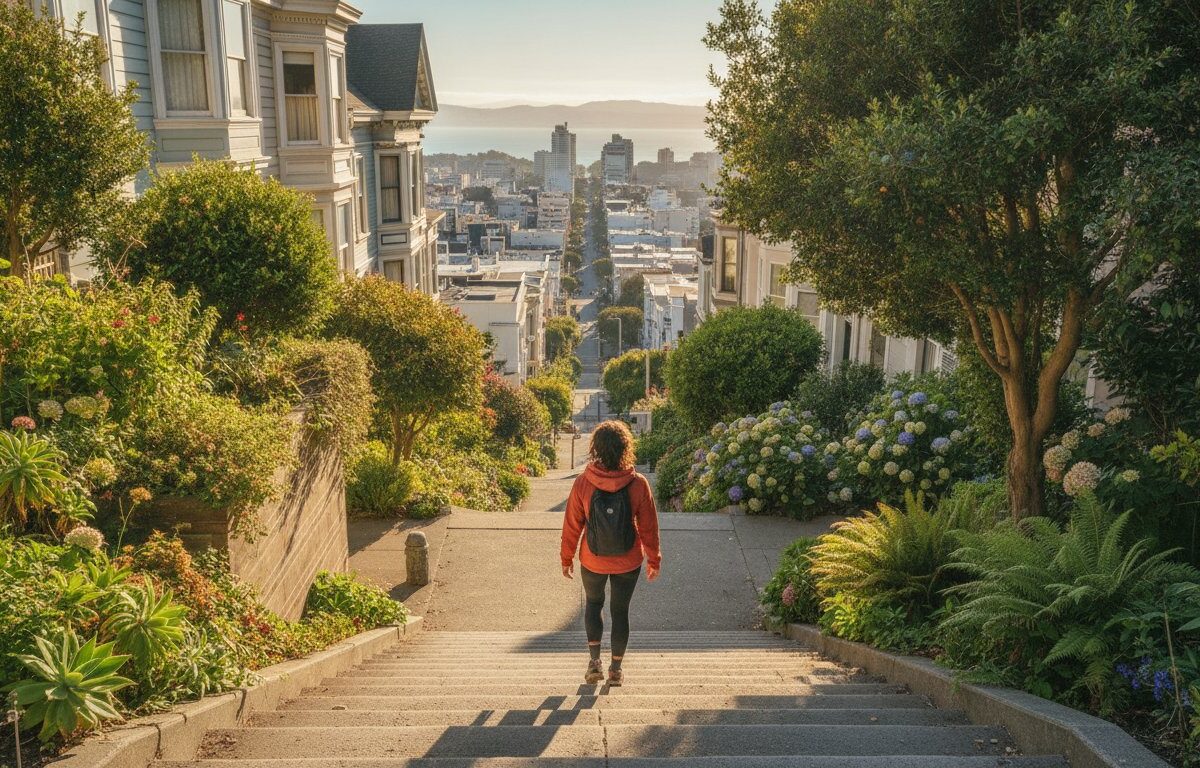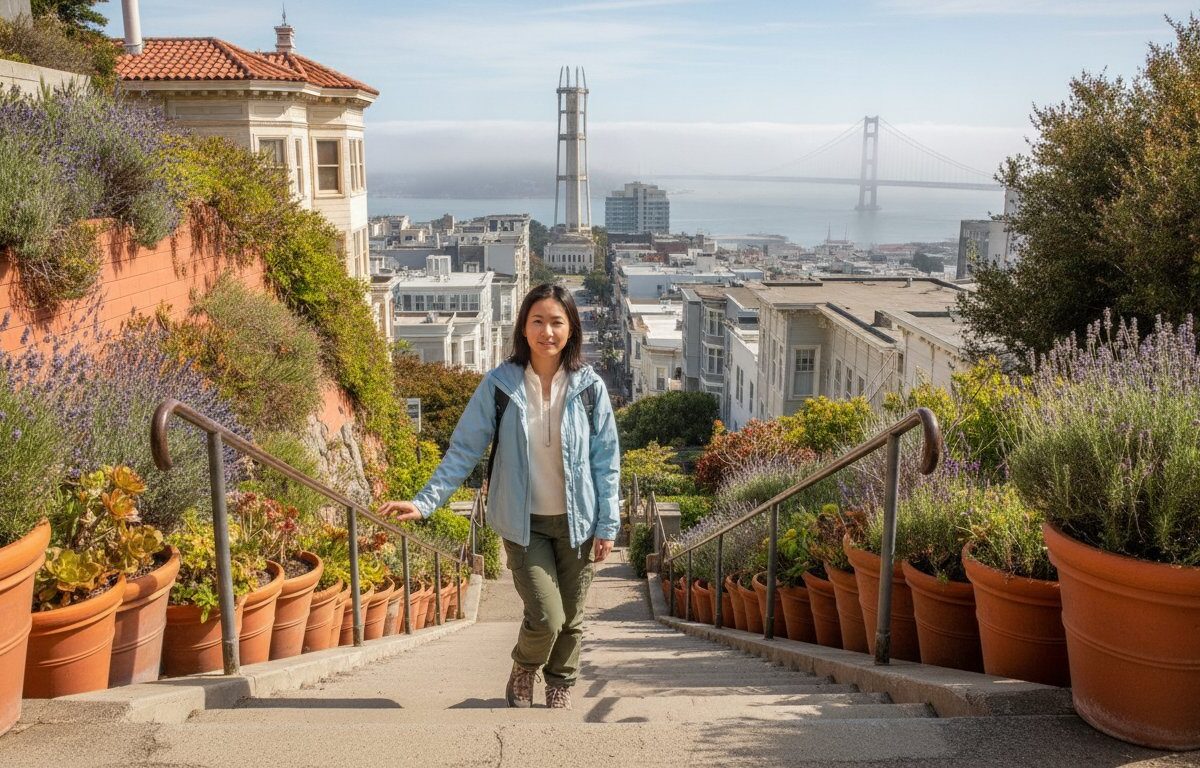
The most profound gallery in San Francisco doesn’t have a gift shop or a velvet rope; it’s the 47 hills that serve as a vertical canvas for the city’s most daring creators. You’ve likely seen the names of famous artists of San Francisco on museum plaques, yet those static displays often feel disconnected from the salt air and steep inclines that actually inspired them. It’s one thing to look at a canvas in a climate-controlled room, and it’s quite another to feel the burn in your quads while standing exactly where a masterpiece was conceived.
We agree that the best way to understand local legends is to walk in their footsteps, far away from the crowded halls of the SFMOMA. This guide promises to transform your perspective on the city’s geography by linking art history directly to the hidden hillside paths and residential backyards of our most iconic neighborhoods. You’ll discover legendary creators who captured the city’s vertical magic, learn to identify the distinct San Francisco style, and find out how to turn a vigorous climb up some of the city’s 900 public staircases into a masterclass in local lore.
Key Takeaways
- Learn how Wayne Thiebaud’s steep perspectives mirror the actual gravity-defying gradients you’ll encounter on a hillside climb.
- Discover why David Park abandoned abstraction to capture the raw, human energy found within the city’s residential neighborhoods.
- Identify the hidden mosaic stairways and New Deal murals that turn public infrastructure into a sea-to-sky visual narrative.
- Trace the influence of famous artists of San Francisco by exploring the specific stairways and secret paths that shaped their most iconic works.
- Swap the static museum experience for a vigorous urban hike that treats the city’s unique topography as a living, breathing gallery.
The Icons of Elevation: Famous Artists Who Defined the San Francisco Aesthetic
San Francisco art isn’t just about paint on canvas; it’s about the physics of the 47 hills. The “San Francisco Style” is a specific visual language born from the city’s unique geometry. It balances the vibrant, golden light of the Pacific with a certain social grit and the vertiginous perspectives of a 45 degree street. When you scan a list of famous artists of San Francisco, you’ll see a recurring obsession with these vertical planes and the way the fog softens the city’s hard edges.
Richard Diebenkorn anchored this aesthetic as a leader of the Bay Area Figurative Movement. He famously transitioned from pure abstraction back to the “figure” and the local landscape, proving that the city’s shapes were too compelling to ignore. His work captures an “Ocean Park” vibe of light and space that feels like a quiet morning on a residential peak. Understanding these legends requires more than a museum ticket. It requires a willingness to climb.
Wayne Thiebaud and the Art of the Steep
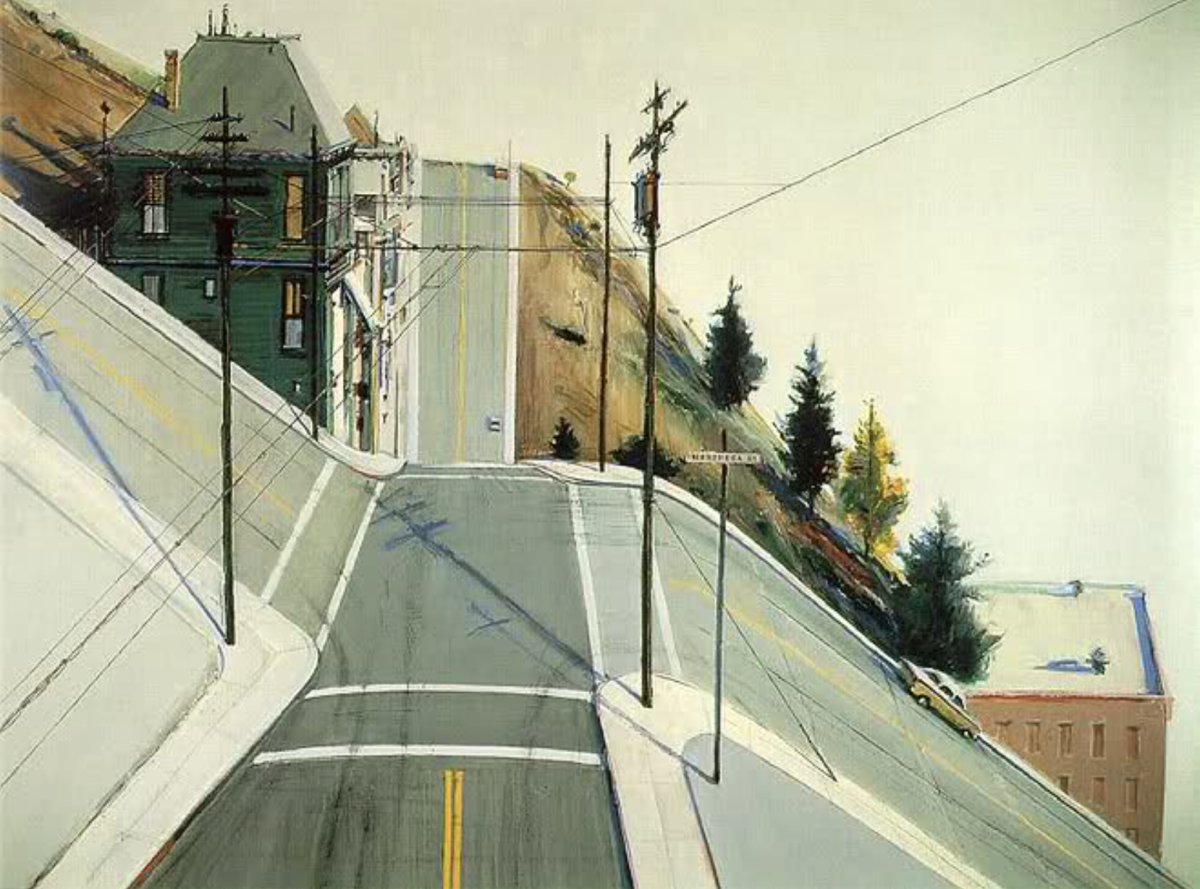
Wayne Thiebaud is often celebrated for his rows of colorful pies, but his “Cityscapes” series is what truly captures the spirit of an urban hike. He painted street inclines that look physically impossible, turning the city’s hills into delicious, vertiginous pastries of concrete and light. Thiebaud’s unique aesthetic functions as a vibrant intersection of pop art playfulness and the sheer architectural vertigo of the city’s residential slopes. These exaggerated street angles mirror the actual physical exertion of our Stairway Walks. We suggest spending time with his “Cityscapes” before you tackle the thigh-burning Filbert Steps; you’ll recognize the same geometric drama in the real world.
Ruth Asawa: The Soul of Public Space
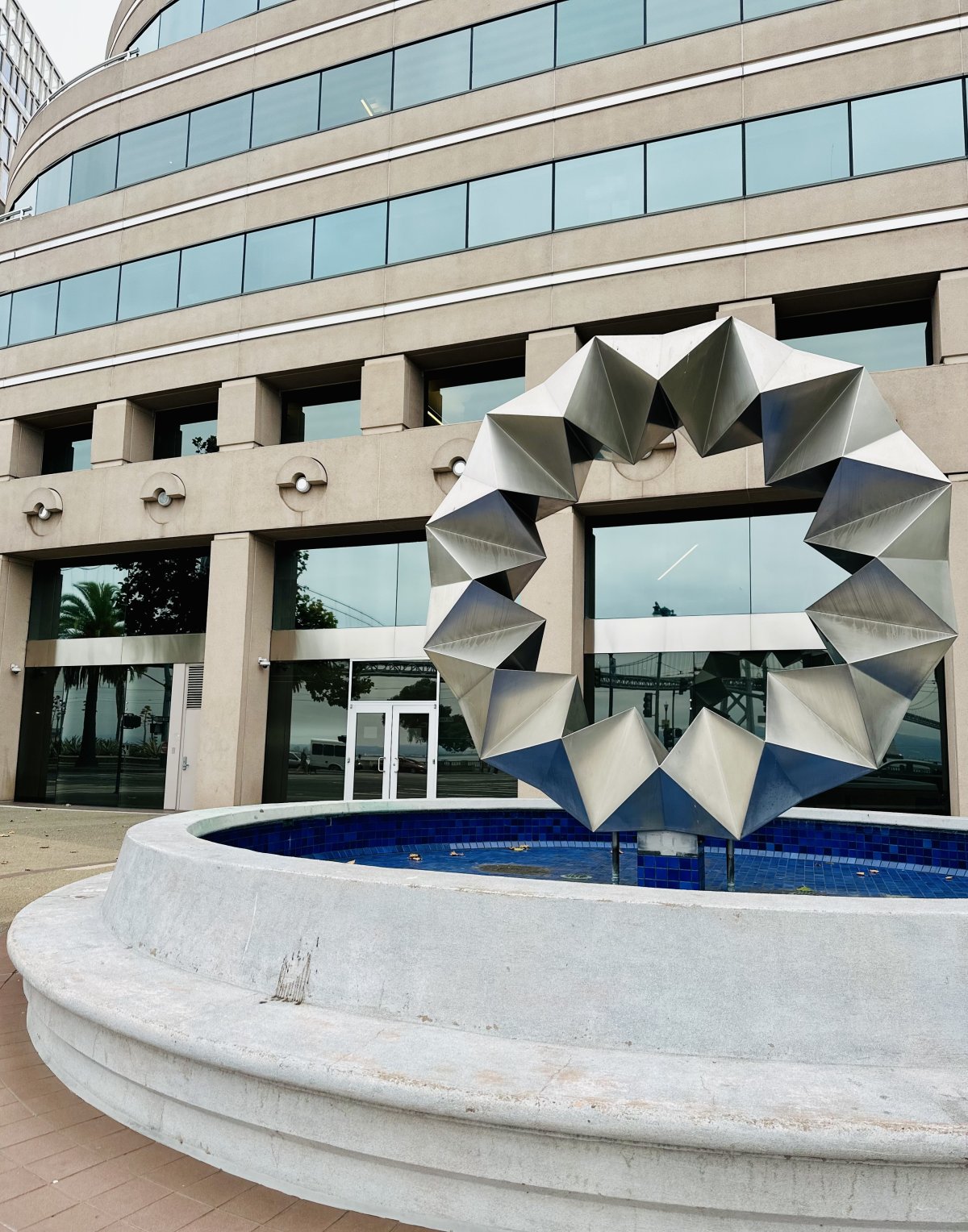
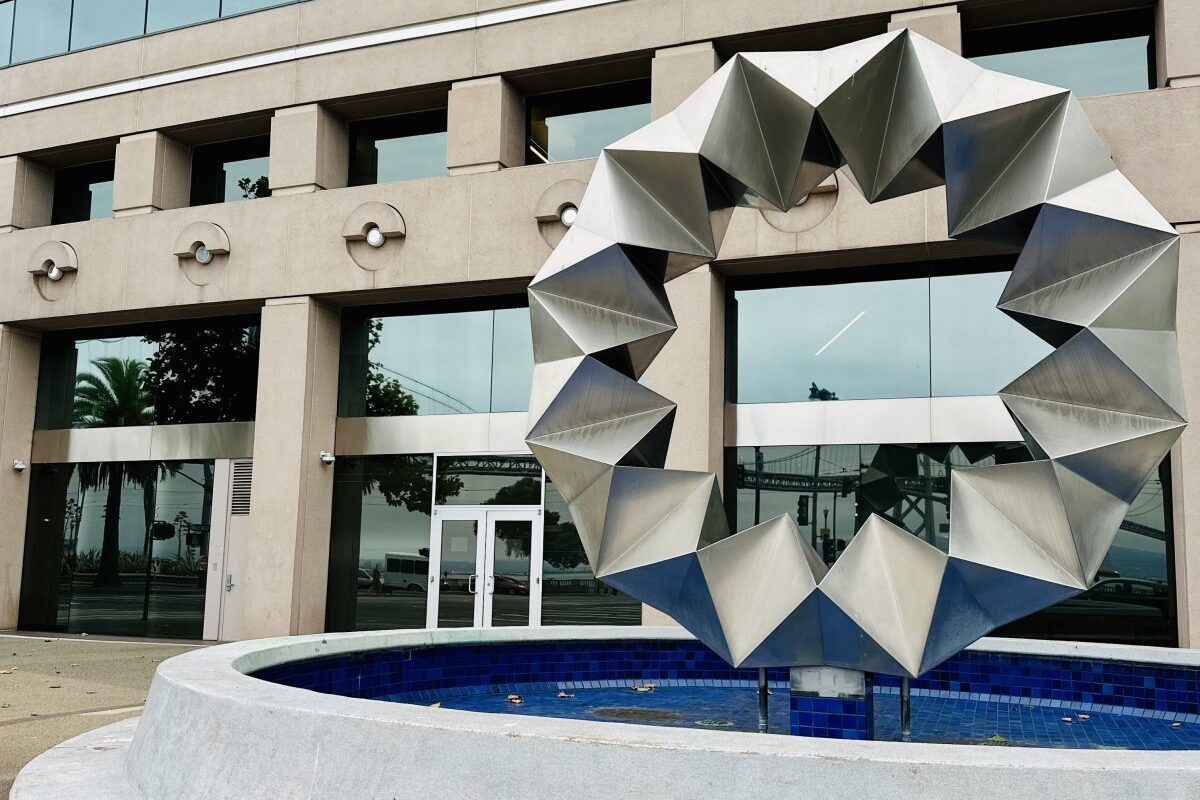
Ruth Asawa’s work is woven into the very fabric of the city she loved. Her looped wire sculptures mirror the intricate patterns of the swirling fog and the hardy flora that clings to our hidden hillside paths. Beyond her famous fountains and the “Garden of Remembrance,” she was a tireless activist for arts education within the San Francisco school system. On a City Drifts walk, you can see her influence in the following ways:
- The delicate, functional ironwork often found on residential stairway railings.
- The integration of organic shapes into the city’s rigid architectural grid.
- A commitment to public art that belongs to the community rather than a private collection.
Asawa’s legacy reminds us that famous artists of San Francisco didn’t just work in studios; they shaped the streets we walk today. Her intricate wire work reflects the same complexity you’ll find in the hidden backyards and secret gardens of our most storied neighborhoods.
The Bay Area Figurative Movement: A Rebellion on the Hills
In the 1950s, a quiet revolution climbed the city’s steep inclines. While New York artists were lost in the splatters of Abstract Expressionism, a group of famous artists of San Francisco decided to look out their windows instead. David Park famously hauled his abstract paintings to the city dump, choosing to return to the human figure and the local landscape. This was the birth of the Bay Area Figurative Movement. It was a rebellion fueled by the city’s specific geography and a refusal to ignore the world outside the studio door.
Rejecting New York for Northern California
New York’s art scene at the time was gritty and internal. It reflected the claustrophobia of the subway and the windowless loft. San Francisco offered something entirely different: light and perspective. The city’s unique topography made pure abstraction feel nearly impossible. When the horizon line is constantly shifting as you walk, the physical world demands your attention. This movement didn’t just happen in studios; it happened on the hills. You can still feel this legacy today when you spot Public Masterpieces integrated into our civic spaces. These works celebrate the “ordinary” beauty of our neighborhoods, from the laundry lines of North Beach to the steep driveways of Potrero Hill.
The Light of the Sunset and Richmond
Elmer Bischoff was the movement’s poet of atmosphere. He captured the hazy, ethereal light that defines a San Francisco morning. Much of this glow is created by the fog, which acts as a natural filter for the Pacific sun. On an early morning Stairway Walk, you’ll see Bischoff’s palette come to life. The colors of the Victorian houses shift as the mist clears, moving from deep violets to bright ochres. We encourage hikers to notice these transitions. The visual exertion of these artists mirrors the physical effort of our climbs. It’s about seeing the city from the inside out and finding the extraordinary in a residential backyard or a hidden hillside path. This movement matters to modern explorers because it proves that the most profound art is often found right on your doorstep.
Public Masterpieces: Murals and Mosaics on the Stairway Paths
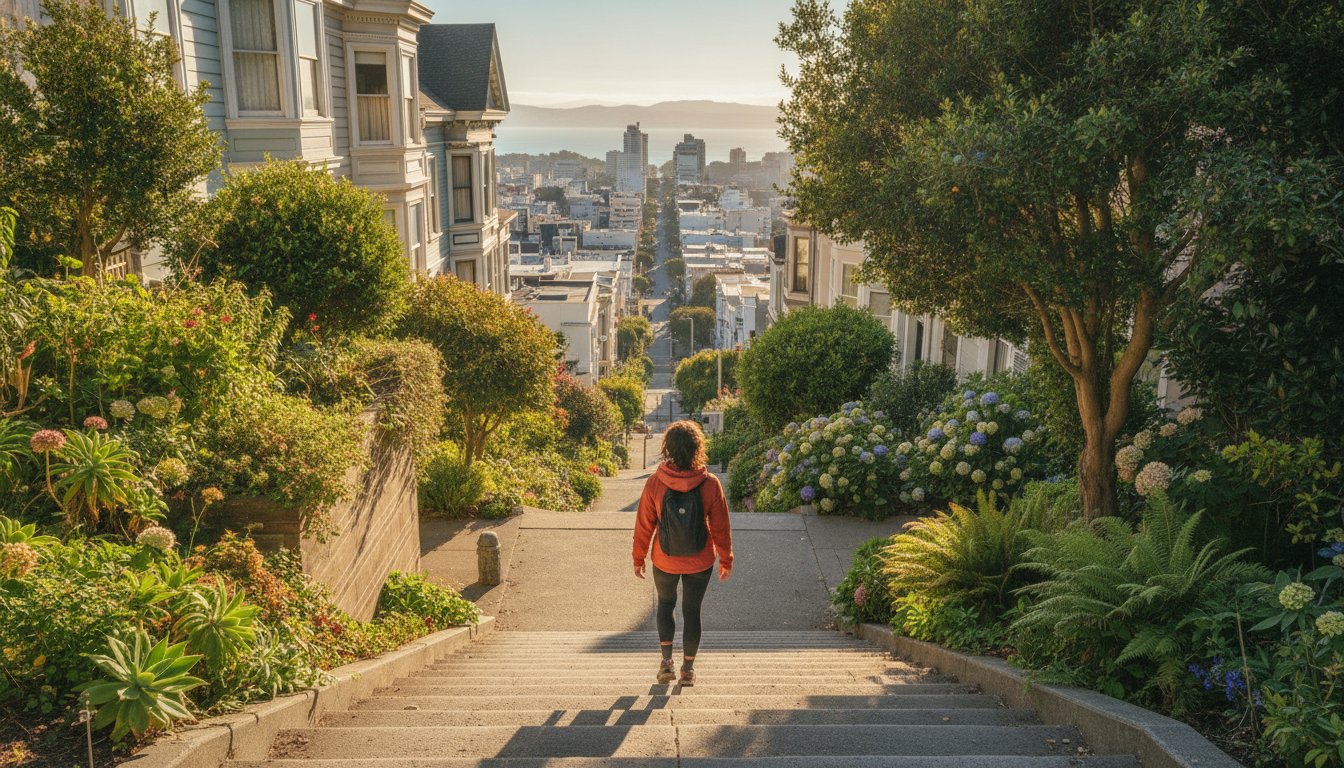
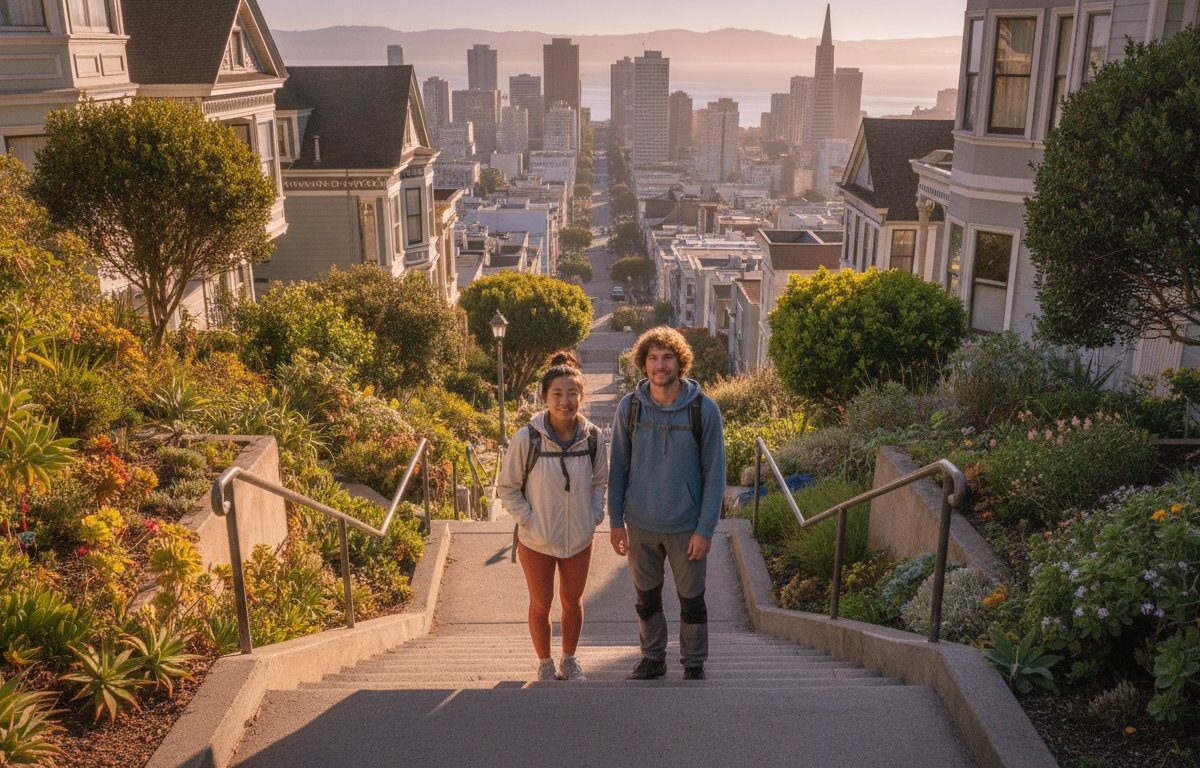
Forget the hushed galleries and velvet ropes. In this city, the most compelling work is often underfoot or painted across a retaining wall. While previous generations of famous artists of San Francisco worked in secluded studios, a new wave of creators turned the city’s infrastructure into a canvas. These public masterpieces require a bit of sweat equity to appreciate, as they’re often tucked away on steep inclines and hidden shortcuts that most tourists miss entirely. San Francisco currently boasts over 900 public staircases, and 15 of these have been transformed into stunning mosaic installations that turn a simple climb into a narrative journey.
The Tiled Steps: Art You Can Climb
The 16th Avenue Tiled Steps on Moraga Street represent a massive collaborative effort. This project features 163 unique mosaic panels that depict a sea-to-sky theme, beginning with deep blue Pacific waves and ending with a brilliant celestial sun at the summit. As you ascend, you’ll notice intricate tiles of fish, birds, and flowers, many of which were sponsored by neighborhood residents. It’s a physical climb that rewards your effort with a shifting visual perspective. We suggest you pause at the very top; the view of the sunset over the Outer Sunset district rivals any landscape hanging in a museum. This community-driven art turns a grueling leg workout into a moment of genuine discovery.
Coit Tower: A Vertical History Lesson
Telegraph Hill offers what we consider the ultimate art hike. Inside the base of Coit Tower, you’ll find a series of fresco murals created in 1934 by 25 different artists. These works were funded by the Public Works of Art Project and tell a gritty, unvarnished story of San Francisco labor and life during the Great Depression. Look closely at the scenes of city streets and industrial docks; you’ll find “controversial” social realism elements that were nearly painted over during the tower’s early years. The climb up the Filbert or Greenwich Steps to reach the tower provides a “residential backyard” perspective that makes the history inside feel even more tangible.
Beyond these landmarks, the Mission District’s Clarion Alley serves as a living gallery for the Chicano art movement. These murals are constantly evolving, reflecting the city’s social pulse in real-time. On a City Drifts tour, we also look for the “accidental” art found in private gardens and backyards that are only visible from public stairs. Ready to see the city’s vertical gallery for yourself? Book one of our Stairway Walks to explore these hidden masterpieces while getting your morning heart rate up.
Experiencing the Gallery Vertically: Why an Urban Hike Beats a Museum
Museums are fine for a rainy Tuesday, but they can’t replicate the sensory overload of a Pacific breeze or the shifting shadows on a Victorian facade. The true masterpieces of this city aren’t confined to frames; they’re baked into the very topography that challenged the famous artists of San Francisco. Seeing the city from the “residential backyard” perspective allows you to witness the intersection of private life and public beauty. This inside-out viewpoint offers a depth that no curated gallery can match, turning every street corner into a potential discovery.
San Francisco’s architecture and steep gradients are the ultimate works of art. When you trade a static room for a dynamic hillside, you aren’t just looking at history; you’re moving through it. City Drifts curates these stories while you burn calories on the steep climbs, ensuring that every step serves both your fitness goals and your intellectual curiosity. It’s a holistic way to engage with the city that prioritizes authentic discovery over surface-level sightseeing.
Fitness Meets Fine Art
There’s a specific clarity that comes with physical exertion. When you’re tackling a steep climb, your heart rate rises alongside your elevation, and the world seems to snap into sharper focus. This endorphin rush sharpens your visual perception, making the intricate details of a hidden mosaic or the specific hue of a fog-filtered sunset pop with new intensity. An urban hike is the perfect pairing for art appreciation because it engages the body and the mind simultaneously. Between the staircases, a local guide can point out the hidden gems and architectural quirks that casual strollers miss. You can Discover the Secret Stairways of San Francisco to find these spots and see how the terrain influenced the city’s creative legends.
Your Invitation to the Hillside Adventure
We invite you to step away from the crowded tourist paths and join us for a City Drifts tour. It’s time to see the work of famous artists of San Francisco through a refined, localized lens that only comes from a morning spent on the hills. You’ll get your heart rate up, learn the lore of the neighborhoods, and gain a sense of mastery over the local terrain. The best part? Every one of our routes ends near a favorite local restaurant, providing the perfect reward for your vertical exploration. Trade the quiet museum halls for the invigorating energy of the hills and discover the city’s vertical magic for yourself.
Step Into the Canvas on Your Next Morning Climb
The city’s steep gradients are more than just a workout; they’re the very lines that defined a movement. We’ve explored how the vertiginous perspectives of Wayne Thiebaud and the hazy morning light of Elmer Bischoff were born from these specific residential slopes. From community-driven mosaics in the Sunset to historic frescoes on Telegraph Hill, the influence of famous artists of San Francisco is etched into every staircase and hidden garden path. You don’t need a museum ticket to find inspiration when you have a set of stairs and a sense of adventure.
City Drifts provides invigorating routes that perfectly combine fitness and culture. Our small group tours allow for authentic discovery, led by expert local guides who know the hidden stories behind every backyard fence. It’s time to elevate your perspective and see the city through a localized lens. Book Your Urban Hike and Discover SF’s Living Gallery with City Drifts. The hills are calling; we’ll see you at the summit.
Frequently Asked Questions
Who is the most famous painter from San Francisco?
Wayne Thiebaud is widely considered the most iconic painter associated with the city’s visual identity. While he gained national fame for his lush depictions of pastries, his “Cityscapes” series captured the impossible angles of our streets with unparalleled precision. His work turned the mundane urban grid into a geometric playground of light and shadow, influencing generations of local creators who followed in his footsteps.
Where can I see the best street art and murals in San Francisco?
The Mission District remains the epicenter for vibrant street art, particularly along Clarion Alley and Balmy Alley. These narrow corridors act as a rotating gallery for social and political expression. However, don’t overlook the residential neighborhoods. Our Stairway Walks often pass through hidden paths where private homeowners have commissioned murals and sculptures that are only visible to those exploring the city on foot.
Are the San Francisco tiled steps considered fine art?
The city’s tiled steps are celebrated examples of community-driven public art that blend mosaic craftsmanship with functional infrastructure. Projects like the 16th Avenue Tiled Steps and the Hidden Garden Steps involve thousands of handmade tiles and years of collaborative design. These installations are recognized for their artistic merit and their ability to transform a standard climb into a sea-to-sky visual narrative that reflects the local environment.
What is the Bay Area Figurative Movement and why is it important?
The Bay Area Figurative Movement was a mid-20th-century shift where local creators moved away from pure abstraction to embrace the human form and local landscape again. Artists like David Park and Elmer Bischoff felt that the physical world of Northern California was too compelling to ignore. This movement is vital because it established a distinct regional identity that celebrated the unique light and topography of the West Coast over New York trends.
Can I see famous art while taking a walking tour of SF neighborhoods?
You can certainly encounter the work of famous artists of San Francisco while exploring our hidden hillside paths. Our tours are designed to function as an urban hike through a living gallery, connecting the physical terrain to the creative history of the neighborhoods. We guide you past historic frescoes, intricate mosaics, and architectural landmarks that tell the story of the city’s artistic evolution far better than a static museum wall.
Which San Francisco artists captured the city’s hills best?
Wayne Thiebaud and Richard Diebenkorn are the masters of capturing the city’s vertical magic. Thiebaud used exaggerated perspectives to mirror the physical sensation of climbing, while Diebenkorn focused on the geometric intersections of light and residential architecture. These famous artists of San Francisco translated the city’s 47 hills into a visual language that emphasizes elevation, perspective, and the unique Pacific atmosphere we experience on every climb.