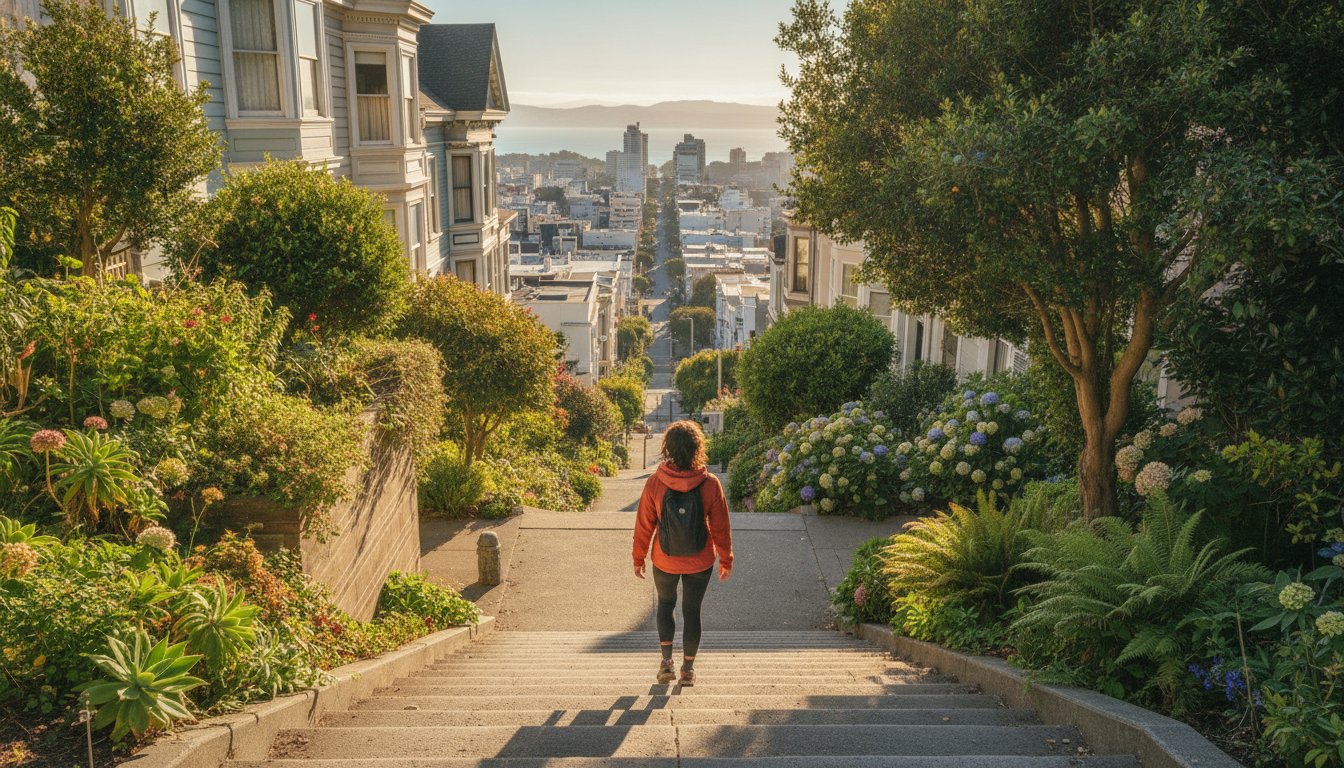
San Francisco was never meant to be a city of cars; it was built for the persistent rhythm of the human heart and the steady climb of a determined hiker. The story behind San Francisco hidden stairways begins with a refusal to let a rigid, flat grid dictate a landscape defined by dramatic peaks. While most visitors stay glued to the cable cars, there are at least 369 public staircases waiting to be conquered. These vertical veins are the city’s best-kept secrets, offering a way to bypass the crowds and engage directly with the terrain.
You probably want more than a surface-level tour; you’re likely looking for a way to break a sweat while discovering the “real” San Francisco that hides in residential backyards. We promise to help you trade the typical tourist loop for a high-intensity urban adventure that reveals the architectural secrets and fascinating history of these legendary paths. We will explore the urban planning history that shaped the hills and show you how to turn a simple walk into a rewarding fitness challenge with unparalleled views.
Key Takeaways
- Understand how a 19th-century conflict between a rigid grid and 40-plus hills created the city’s unique pedestrian highways.
- Uncover the story behind San Francisco hidden stairways to gain a rare, intimate look at residential architecture and private garden corridors.
- Transform your morning routine by treating these steep climbs as a high-intensity urban hike that rivals traditional trail workouts.
- Access a curated strategy for navigating the most rewarding vertical paths and finding secret views far from the typical tourist crowds.
Built on the Impossible: Why San Francisco Has Hundreds of Hidden Stairways
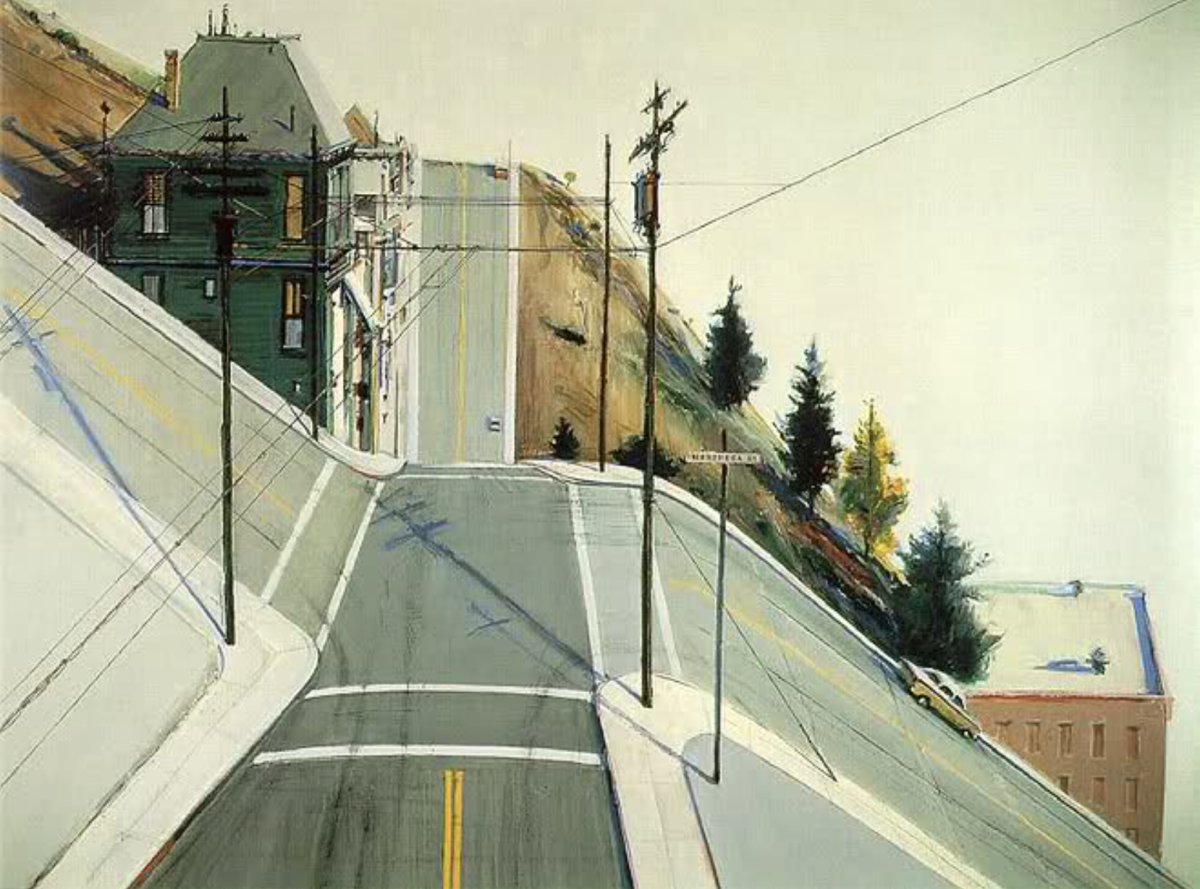
The story behind San Francisco hidden stairways isn’t just about aesthetics; it’s a tale of urban defiance. In the mid-19th century, city planners imposed a rigid, rectangular grid onto a landscape of over 40 hills. They ignored the 30-degree inclines and jagged outcrops, drawing straight lines where nature demanded curves. This clash between ink and earth left hundreds of “unbuildable” blocks where traditional roads simply couldn’t go. Instead of paving over the impossible, the city designated these steep corridors as public rights-of-way. These weren’t just shortcuts. They were the original pedestrian highways for a pre-automobile era, connecting working-class residents to the streetcar lines below. After the 1906 earthquake, these paths became even more vital as the city scrambled to rebuild and reconnect its shattered neighborhoods.
The Grid vs. The Hill: A Topographical Rebellion
Early developers often treated the city’s topography as a minor inconvenience rather than a defining feature. This stubbornness led to the creation of paper streets, which are mapped roads that exist only as stairways because the grade is too steep for vehicles. These paths represent a physical rebellion against the “Standard Grid” of the 1800s. They allow us to bypass the predictable traffic patterns of the lower elevations. Today, they offer a unique way to navigate the heights, providing a vertical escape that feels entirely disconnected from the city’s modern congestion.
From Utility to Art: The Evolution of the Steps
The first versions of these stairs were often rudimentary, consisting of simple wooden planks hammered into the dirt to help residents reach their hillside homes. As the city matured, these utilitarian routes evolved into permanent concrete and stone structures. In recent decades, community-led initiatives have transformed these transit routes into lush gardens and public galleries. A prime example of this transition is the 16th Avenue Tiled Steps, where neighbors funded a massive mosaic project to turn a standard climb into a destination. This shift from pure function to neighborhood pride is what makes our Stairway Walks so rewarding. You aren’t just climbing stairs; you’re walking through a living history of local effort and architectural ingenuity that most visitors never see.
Vertical Neighborhoods: The Architecture of Stairway Living
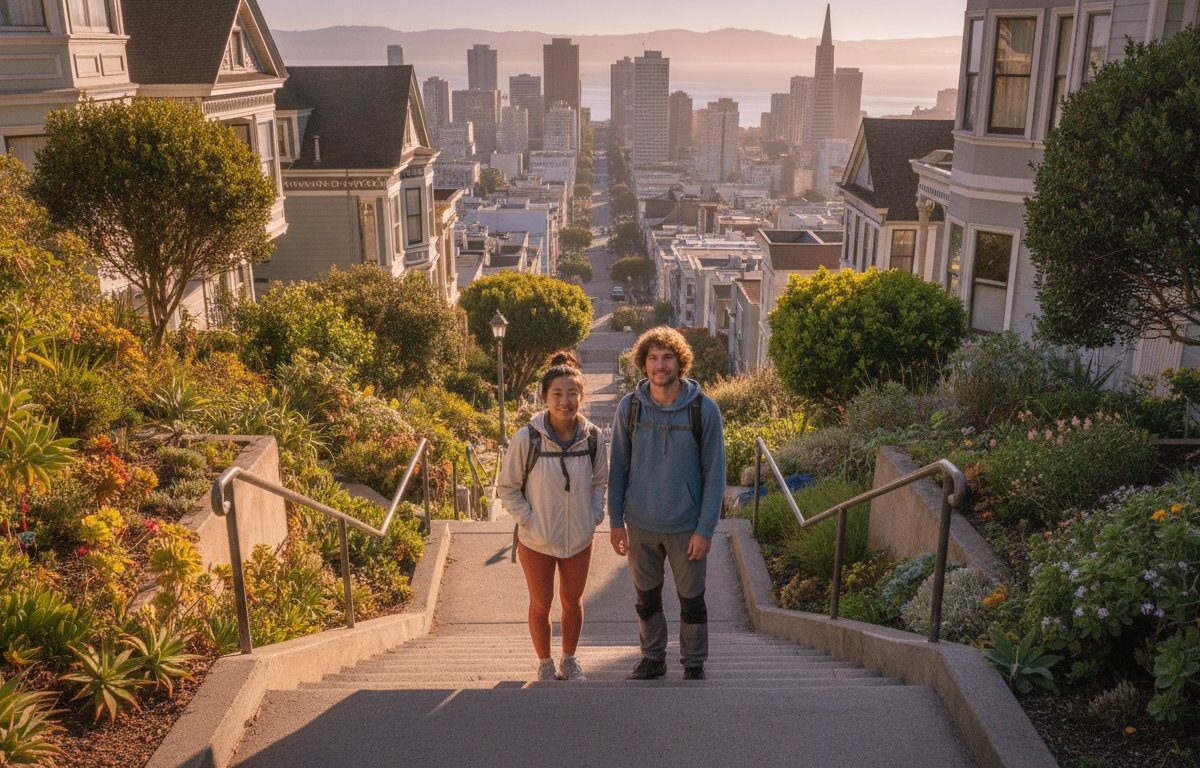
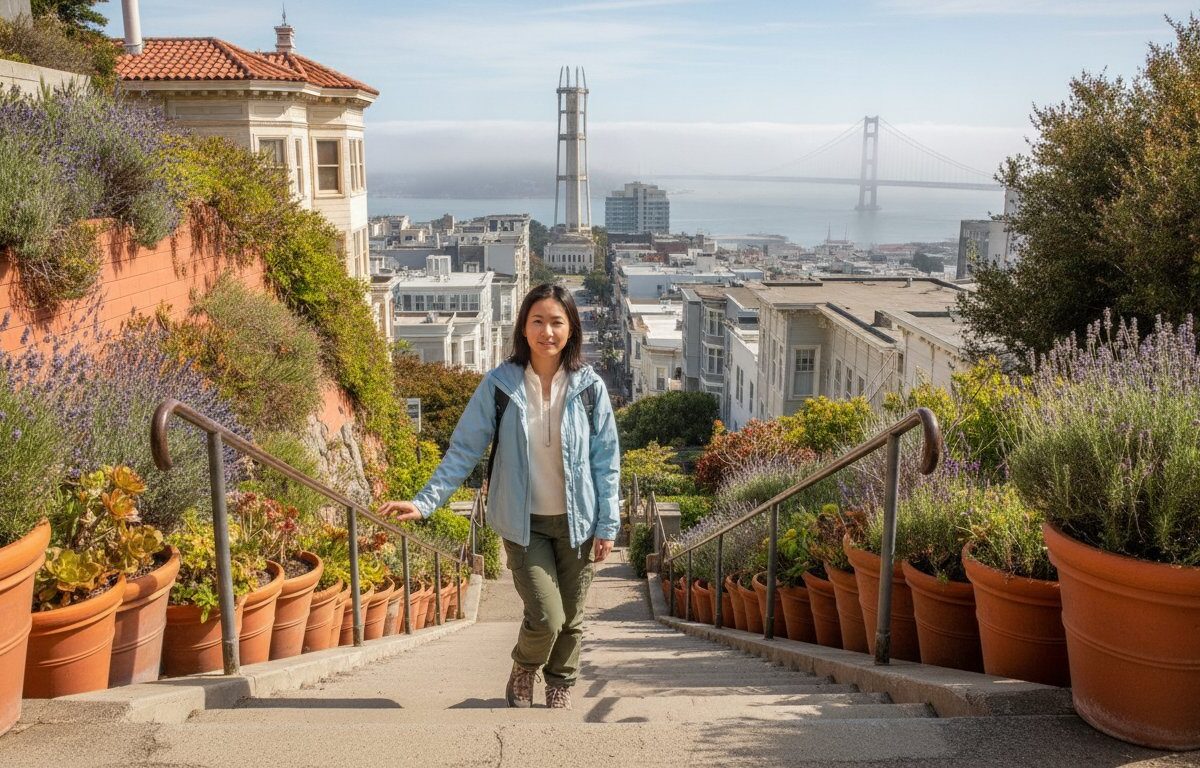
Imagine a street where the sound of engines is replaced by the rustle of jasmine and the steady thud of hiking boots. The story behind San Francisco hidden stairways is written in the architecture of the homes that line them. These are vertical neighborhoods. Residents here trade a driveway for a front-row seat to the city’s topography. You’ll see everything from weathered Victorian gingerbread to sleek, glass-heavy Mid-century Modern boxes. These structures aren’t just built on the hills; they’re integrated into them. Because there is no car access, the social dynamic shifts. Neighbors meet on landings rather than in traffic.
Maintaining these “Street Parks” requires serious local effort. Many of these corridors are managed through partnerships between residents and the city. It’s a labor of love that results in the lush, hidden greenery you see today. If you want to experience these garden corridors properly, joining one of our Stairway Walks ensures you find the best routes without getting lost in a dead-end cul-de-sac.
The Mosaic Masterpieces: Art You Can Climb
The 16th Avenue Tiled Steps are perhaps the most famous example of community-led beauty. This project consists of 163 mosaic steps, funded by over 220 Sunset residents. Just a few blocks away, the Hidden Garden Steps offer 148 steps of intricate tile work. These aren’t just transit routes. They’re collaborative art installations that turned simple utility into global landmarks. Local artists worked alongside neighbors to create patterns that tell a story of the sea, the stars, and the local flora.
Etiquette of the Hidden Path
Walking through these stairs feels like a peek into a private world. You are often just inches away from someone’s living room window or garden gate. Respecting this “backyard intimacy” is essential. Keep noise levels low. Stick to the designated paths. Always follow “leave no trace” principles. A local guide acts as a bridge between tourist and guest, ensuring you enjoy the views without disrupting the quiet life of the residents.
The Urban Hike: Why SF Stairways are the Ultimate Outdoor Workout
Many visitors view these steps through a camera lens, searching for the perfect Instagram angle. We prefer to view them as a high-intensity treadmill designed by history. The story behind San Francisco hidden stairways is as much about physical endurance as it is about urban planning. An urban hike combines the cardiovascular rigor of a mountain trail with the quiet contemplation of a cultural study. You aren’t just walking; you’re engaging in a functional movement pattern that challenges your balance and stamina. With some streets hitting a staggering 41% grade, these paths are a badge of honor for anyone who prefers their exercise with a side of architecture.
Climbing stairs burns more calories per minute than traditional hiking on flat terrain. It targets the glutes, hamstrings, and calves with every vertical inch. If you want to master the city’s topography while building real-world strength, book one of our Stairway Walks to turn your morning into a transformative training session.
Mastering the Grade: Fitness Benefits of Stair Climbing
Sustained vertical movement offers cardiovascular advantages that flat pavement simply can’t match. This style of urban hiking prepares your body for more rugged terrain, making it the perfect training ground for future backcountry adventures. We call the signature feeling of a City Drifts walk the “SF Quad Burn.” It’s that specific, satisfying heat in your legs that signals you’ve truly conquered the heights. It’s a visceral reminder of the effort required to live in a city built on the impossible.
Perspective and Elevation: The Mental Reward
There is a profound psychological shift that occurs when you rise above the city noise. As you climb, the roar of traffic fades into the background, replaced by the quiet exclusivity of a hidden vista. Reaching a peak provides a clearer understanding of the city’s complex geography. You can see how the neighborhoods interlock and how the water frames the land. This sense of discovery provides a mental clarity that a gym workout never could. You earn the view, and that makes the perspective feel earned, too.
Navigating the Heights: How to Discover the City’s Best Vertical Paths
Finding the right route requires more than just a map; it requires an eye for the overlooked. The story behind San Francisco hidden stairways is best understood when you aren’t fighting for space on a crowded sidewalk. We recommend starting your ascent in the early morning. The air is crisp, the light hits the Victorian facades at a perfect angle, and the hills belong almost entirely to the hikers. A curated strategy involves linking several smaller climbs into a single, continuous loop. This approach transforms a simple walk into a meaningful summit experience that tests your endurance while rewarding you with “unsearchable” views that tourists usually miss.
While solo exploration has its charms, an organized tour provides mastery over the local terrain that a GPS simply can’t offer. We’ve done the legwork to find the paths that cut through the most vibrant residential corridors. Every City Drifts route is designed to be an invigorating challenge that concludes at a favorite local restaurant. It’s the ultimate reward for a morning spent conquering the city’s vertical veins. You get the workout, the history, and the best breakfast in the neighborhood all in one go.
The City Drifts Approach: Fitness Meets Folklore
We prioritize the spirit of the urban hike over dry, academic lectures. Our focus is on the physical adventure of the climb and the thrill of discovering residential backyards that feel like private sanctuaries. You’ll learn the lore of the neighborhoods as you move through them, keeping your heart rate up and your curiosity engaged. If you’re ready to see the city from a new perspective, Book Your San Francisco Stairway Tour and join us for a morning of movement and discovery.
Planning Your Vertical Adventure
Success on the stairs depends on your preparation. Wear supportive footwear with excellent grip, as the 41% grades found on some city streets can be unforgiving on slick soles. Layering is non-negotiable; San Francisco’s microclimates mean you’ll be sweating on the climb and shivering at the windy peaks. Hydration is equally vital for maintaining your pace. For those planning a solo journey, these neighborhoods offer the most rewarding starts:
- Telegraph Hill: Home to the lush gardens of the Filbert and Greenwich steps.
- Russian Hill: Features hidden paths with dramatic views of the Bay Bridge and Alcatraz.
- The Sunset: Offers the famous mosaic masterpieces and sweeping Pacific vistas.
Rise Above the Routine: Your Vertical Journey Awaits
San Francisco is a city that rewards those who look up and keep climbing. We’ve explored how a stubborn 19th-century grid created these pedestrian highways and how community art projects turned simple utility into vibrant landmarks. You now understand that the story behind San Francisco hidden stairways is a narrative of resilience, architecture, and high-intensity movement. Trading the sidewalk for the stairs doesn’t just offer the signature “SF Quad Burn”; it provides a rare perspective on the city’s intimate residential life and unsearchable vistas.
It’s time to stop reading and start climbing. Our expert guides are ready to lead you through secret garden corridors and steep grades that most maps ignore. We combine high-intensity fitness with authentic discovery to ensure your morning is anything but ordinary. It’s the perfect way to master the local terrain while gaining authentic local perspectives you won’t find in a guidebook.
Book an invigorating City Drifts Urban Hike and discover the stories behind the stairs!
The hills are calling. We’ll see you at the summit.
Frequently Asked Questions
Are the San Francisco hidden stairways public or private property?
Most hidden stairways are public rights-of-way, meaning they’re legally designated as city streets despite their vertical nature. These “paper streets” provide essential pedestrian access through steep residential neighborhoods. While you’ll often walk through what feels like a private garden, these paths are open to the public. We always remind our hikers to respect the “backyard intimacy” of these routes, as homes are often just inches from the steps.
How many stairways are there in San Francisco in 2026?
There are at least 369 public stairways in San Francisco as of 2026. This figure comes from comprehensive mapping efforts like the “San Francisco Stairways” guide. While some broader estimates suggest over 600 total paths, 369 are officially recognized as public. The story behind San Francisco hidden stairways continues to grow as community groups restore more of these forgotten corridors, turning utilitarian concrete into neighborhood landmarks.
What are the steepest stairs in San Francisco for a workout?
The stairs on Telegraph Hill and the Sunset District offer the most intense vertical challenges for outdoor enthusiasts. The Filbert and Greenwich steps provide a sustained climb with dramatic elevation changes. For those seeking the ultimate “SF Quad Burn,” the 16th Avenue Tiled Steps consist of 163 mosaic steps that require serious stamina. These routes often tackle grades up to 41%, making them a far more invigorating workout than any standard city gym.
Can I see the mosaic tiled steps on a guided tour?
Yes, you can visit the iconic mosaic tiled steps on our guided Stairway Walks. These tours provide a deep dive into the 16th Avenue Tiled Steps and the Hidden Garden Steps. You’ll learn about the community-led effort that funded these 163 and 148 mosaic steps. Seeing them with a guide ensures you understand the narrative behind the art while conquering the physical climb through the Sunset’s residential corridors.
How difficult are the urban hikes through San Francisco’s hills?
Urban hikes through the city’s hills are generally high-intensity adventures that require a moderate level of fitness. You’ll encounter steep inclines, uneven terrain, and hundreds of steps in a single session. We frame these walks as a blend of physical exertion and cultural discovery. It’s an invigorating way to explore the “real” San Francisco beyond the flat tourist zones, but you should be prepared for a steady cardiovascular challenge.
What is the best time of day to explore the secret stairways?
Early morning is the absolute best time to explore the secret stairways. The light is soft and golden, which is perfect for seeing the architectural details of hillside homes without the glare of the midday sun. Temperatures are cooler, making the steep climbs much more comfortable for a high-intensity workout. You’ll also find the paths are much quieter, allowing for a sense of quiet exclusivity before the city fully wakes up.