San Francisco has a reputation for reinvention. From the Gold Rush of 1849 to the tech boom of the new millennium, it’s a city that seems to constantly shed its skin. But if you want to understand the DNA of modern San Francisco—its steep hillsides packed with homes, its diverse cultural tapestry, and its progressive spirit—you have to look at the four years that changed everything: World War II.
The war was more than a historical event; it was a geological force that physically and socially reshaped the city. It blasted San Francisco out of its provincial, post-Gold Rush slumber and thrust it onto the global stage. This wasn’t just about military strategy; it was about a population explosion so massive it forced the city to conquer its “unbuildable” hills, creating the very terrain we now explore on invigorating urban hikes. The story of how WWII changed San Francisco isn’t found in a museum—it’s written into the concrete of its hidden stairways and the layout of its vibrant neighborhoods.
The Second Gold Rush: When San Francisco Became the ‘Arsenal of Democracy’
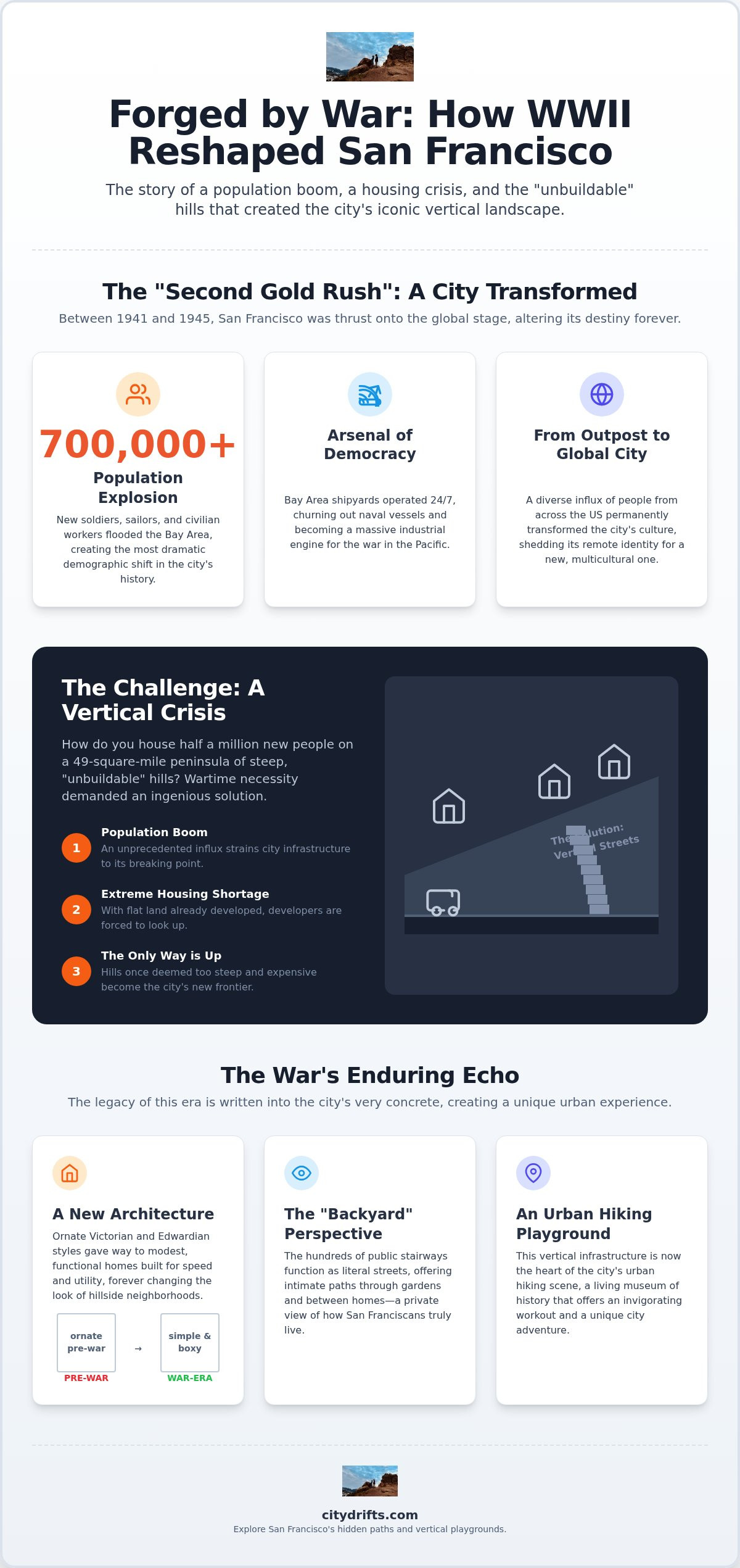
Before the war, San Francisco was a significant West Coast port, but it was still a relatively sleepy town, defined by fog, finance, and the long shadow of the 1849 Gold Rush. Pearl Harbor changed that overnight. The city became the primary port of embarkation for the Pacific Theater, the beating heart of America’s war effort against Japan. This triggered what historians call the “Second Gold Rush”—a staggering influx of over 700,000 soldiers, sailors, and civilian workers who flooded the Bay Area between 1941 and 1945.
- The Arsenal of Democracy: The Bay Area was transformed into a massive industrial engine. Shipyards at Hunter’s Point, Sausalito, and Richmond operated 24/7, churning out Liberty Ships and naval vessels at a breathtaking pace.
- Fortress San Francisco: The city’s geography, once a scenic novelty, became a strategic asset. The hills offered natural defensive positions, and the entire coastline bristled with gun batteries and lookout posts, turning the Bay into a fortified harbor.
- Population Boom: This was the most dramatic demographic shift in the city’s history. The sudden demand for labor drew people from every corner of the country, fundamentally and permanently altering the city’s social and physical landscape.
- Neighborhood Pride’s Origin: The need to house this new population in a city constrained by hills and water forged distinct, self-reliant neighborhoods, each with a unique character born from the wartime scramble.
From Foggy Outpost to Global Hub
The sheer scale of the mobilization was immense. The demand for labor at shipyards like the Hunters Point Naval Shipyard was insatiable, pulling in workers who needed places to live, eat, and socialize. The city’s existing infrastructure buckled under the strain. Housing, transit, and social services, designed for a much smaller population, were overwhelmed almost instantly. This explosive growth forced San Francisco to expand in ways its planners had never imagined, pushing development into previously ignored areas and up the city’s steepest slopes. Fortress San Francisco was not just a military term; it described the all-encompassing mobilization of the Bay Area’s people, industry, and landscape for a single, urgent purpose.
The Social Fabric Stretches
The Second Gold Rush was not just about numbers; it was about diversity. For the first time, large numbers of African Americans from the South, women entering the industrial workforce as “Rosie the Riveters,” and people from all over rural America arrived in San Francisco. This sudden mingling of cultures, races, and ideas was a shock to the city’s established, largely white, conservative system. The war effort invited everyone to the party, but the city struggled to accommodate them, leading to social friction, housing shortages, and the redrawing of cultural maps. In just a few short years, San Francisco shed its identity as a remote “West Coast town” and was reborn as a complex, multicultural “Global City.”
Climbing the Housing Crisis: Why We Have So Many Stairways
Where do you put half a million new people in a city built on a 49-square-mile peninsula of steep hills? Before the war, many of San Francisco’s most dramatic slopes were considered unbuildable—too expensive and difficult to develop. The housing crisis of the 1940s changed that calculation from an option to an imperative.
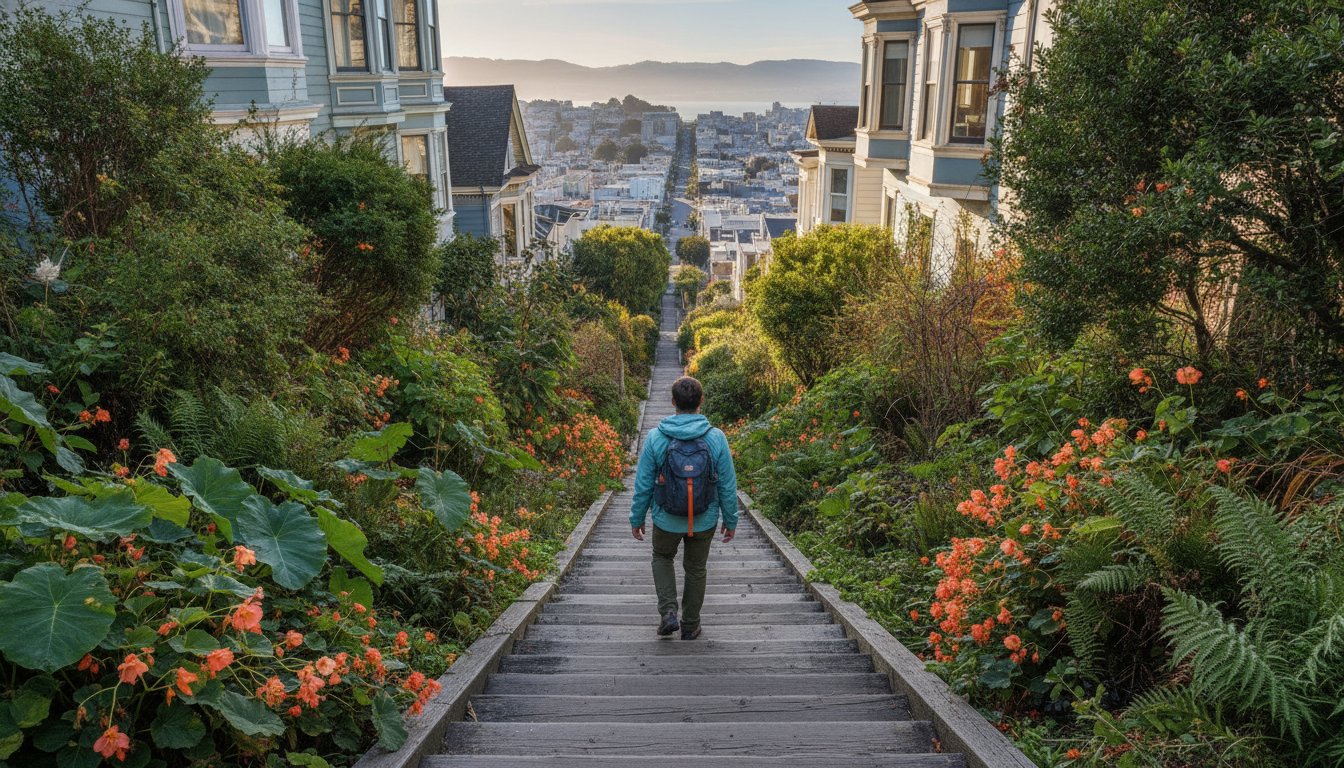
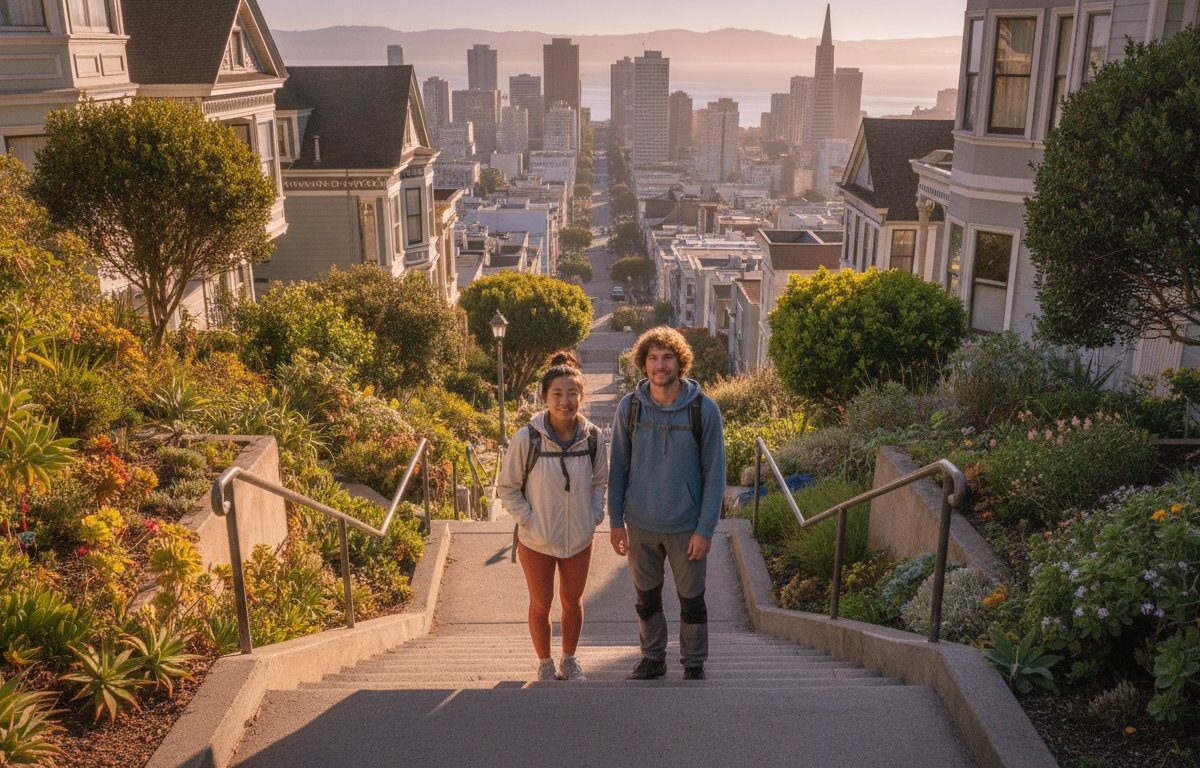
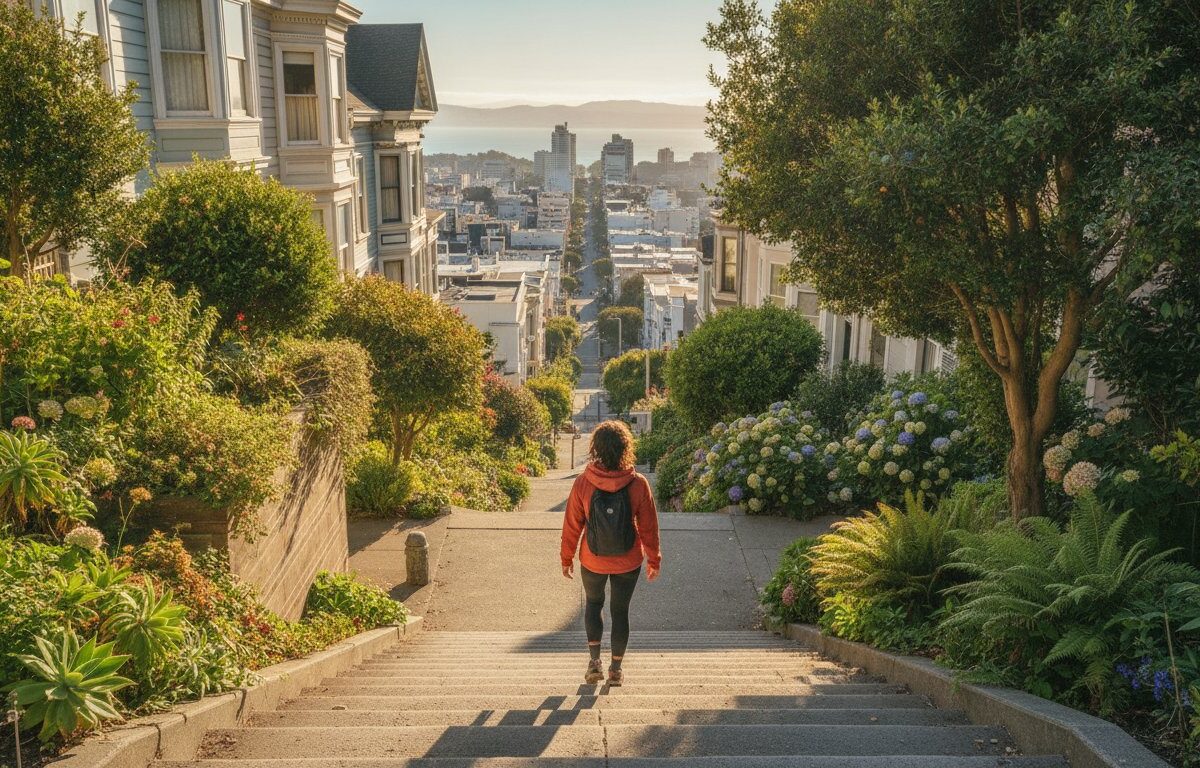
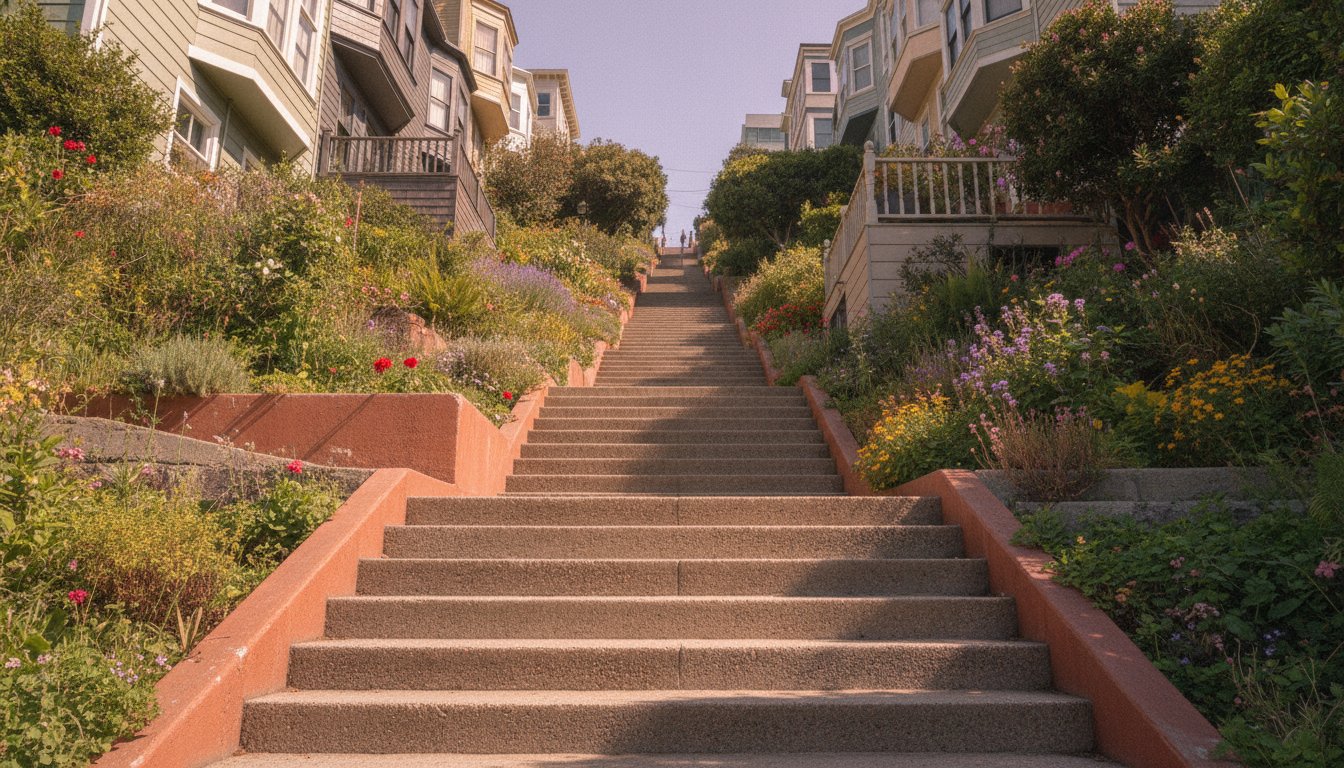
Developers, aided by wartime necessity, began carving into hillsides previously left to wildflowers and fog. They built dense rows of modest, functional homes for the influx of workers. But a house on a 30-degree slope presents a problem: how do you get to it? The answer was one of San Francisco’s most charming and defining features: the public stairway. The city built hundreds of stairways that function as literal streets, connecting hilltop homes to the streetcar and bus lines below that whisked workers to the shipyards and bases. These paths are the secret circulatory system of the city, a direct legacy of its wartime scramble for space. To learn more about their unique origins, you can explore the story behind San Francisco’s hidden stairways.
Engineering the Impossible Hills
Many of these stairways were built with the help of federal programs like the Works Progress Administration (WPA) in the years leading up to the war, but the conflict accelerated their construction. Wartime labor carved paths into the city’s bedrock, creating the vertical infrastructure necessary for these new hillside communities to function. As you hike through neighborhoods like Potrero Hill or the Sunset, you can see the architectural shift. Pre-war homes are often ornate Victorians and Edwardians built on flatter ground. The war-era housing is different: simple, boxy, and functional, designed for speed and efficiency. These homes, clinging to the hillsides, represent a moment when San Francisco’s topography forced architects to prioritize verticality and utility over ornamentation.
Backyard Perspectives
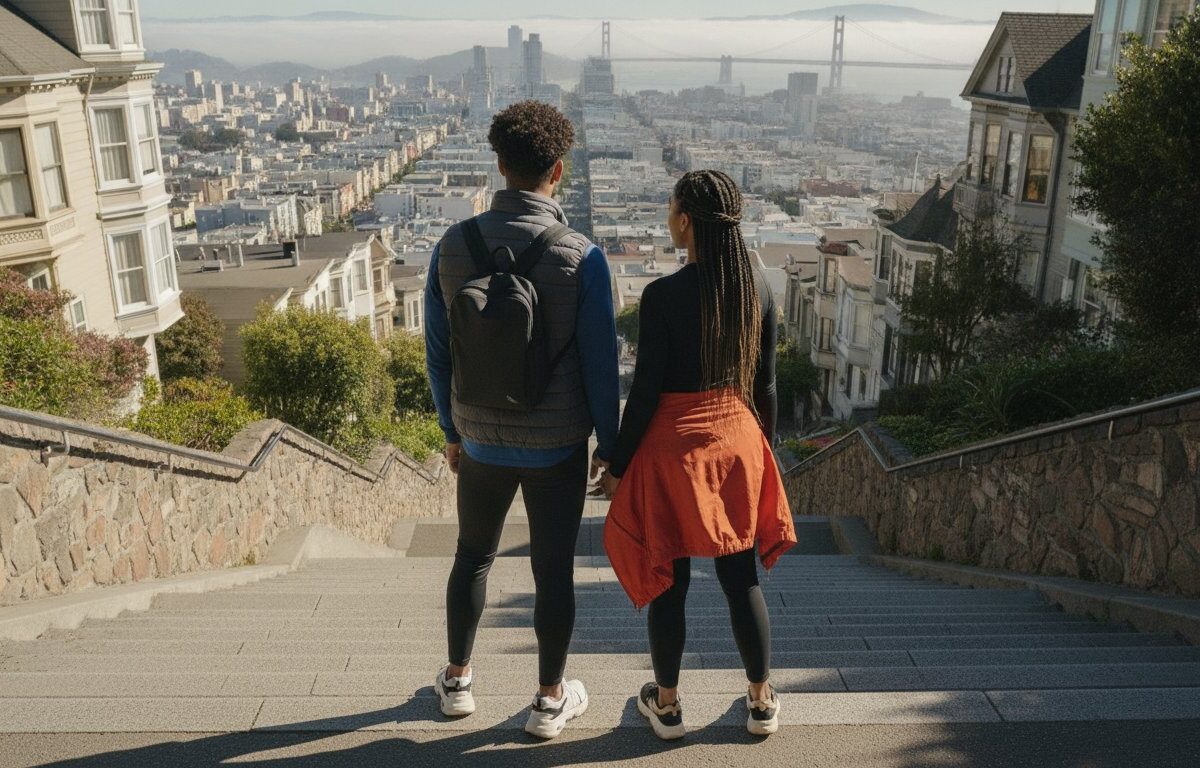
What makes these stairways so magical today is how they transform the urban landscape. They aren’t grand boulevards; they are intimate paths that often run between houses, through gardens, and past back windows. Walking them feels less like a public tour and more like a private discovery. You ascend through the “backyards” of the city, gaining an intimate perspective on how San Franciscans truly live. This is where you uncover the city’s real history—not in the monuments downtown, but in the terraced gardens and sweeping views earned by climbing the very paths built for shipyard workers a generation ago.
Neighborhood Metamorphosis: From the Fillmore to the Presidio
The war didn’t just build new parts of the city; it radically transformed existing neighborhoods, often with profound and painful consequences. The lines and legacies drawn during these four years define the neighborhoods we explore today, from the jazz clubs of the Fillmore to the sprawling parklands of the Presidio.
The Fillmore’s Painful Pivot
Before the war, the area we know as Japantown was a thriving, self-sufficient community, the cultural heart of the largest Japanese American population on the West Coast. In 1942, this vibrant community was erased. Following Executive Order 9066, over 120,000 people of Japanese ancestry, most of them American citizens, were forcibly removed from their homes and businesses and sent to internment camps. This created a tragic vacancy in the Fillmore District.
Simultaneously, the Second Great Migration was bringing tens of thousands of African American workers to the Bay Area to fill jobs in the war industries. With housing discrimination rampant in other parts of the city, these new arrivals found homes and storefronts in the now-empty Fillmore. Almost overnight, the neighborhood transformed into a bustling, energetic hub of Black culture known as the “Harlem of the West.” Jazz clubs, restaurants, and businesses flourished, creating a legendary nightlife and music scene that defined San Francisco for decades. When you walk the Fillmore today, the echoes of this complex, painful, and vibrant history are everywhere, a testament to how the tides of war can reshape a community’s very soul.
The Presidio’s Lasting Footprint
For centuries, the Presidio was a sleepy military post, notable more for its scenic beauty than its strategic importance. World War II turned it into the nerve center for the defense of the entire West Coast. The Presidio served as the headquarters for the Western Defense Command, and its quiet lawns were quickly covered with barracks, offices, and hospitals. Its coastal bluffs were fortified with gun batteries, ready to defend against a naval attack that thankfully never came.
After the war, the Presidio remained an active Army base for decades before its remarkable transformation into a national park. Today, this former military stronghold is an urban hiker’s paradise, a sprawling landscape of forests, trails, and historic buildings. As you explore its paths, you’re walking through layers of history—from its Spanish colonial origins to its critical role in WWII. You can still discover old bunkers and gun emplacements hidden in the hills, tangible relics of the “Fortress San Francisco” era. For a deeper dive, consider a walking guide to what the Presidio has to offer.
The War’s Enduring Echo: A New Identity for a New Era
When the war ended in 1945, the city didn’t simply revert to its pre-war self. The changes were too deep, the new population too large, and the perspective too global. This post-war period set the stage for the cultural revolutions that would come to define San Francisco in the popular imagination, transforming it from a conservative port town into a beacon of progressivism and counterculture.
The GIs and Workers Who Stayed
Hundreds of thousands of soldiers who had shipped out to the Pacific from San Francisco returned to its shores after the war. For many, the city had been their last taste of America, and its stunning vistas and dynamic energy were a powerful draw. Instead of returning to their hometowns across the country, they, along with a significant number of war industry workers, decided to stay. They had seen a different world, both in the war and in the diverse, bustling city of San Francisco itself. This massive group of new, permanent residents infused the city with a fresh, less tradition-bound energy, permanently altering its demographic and political landscape.
Seeds of a Counterculture
This new population—more diverse, more transient, and more worldly than the city’s old guard—created a fertile ground for new ideas. The rigid social structures of the pre-war era began to crack. The city’s newfound density and diversity fostered an environment of tolerance and experimentation that was unique among American cities at the time. This was the soil from which the Beat Generation sprang in the 1950s, followed by the Summer of Love in the 1960s. The military’s “blue discharges” for gay and lesbian service members, which often stranded them in port cities far from home, inadvertently helped create the foundation for one of the world’s most prominent LGBTQ+ communities, culminating in the gay rights movement that found its political voice in neighborhoods like the Castro. The line from the shipyards of 1943 to the progressive politics of today is a direct one, forged in the crucible of the war.
Experience the Legacy: Why an Urban Hike is the Best History Lesson
Reading about history is one thing. To truly understand how WWII sculpted San Francisco, you have to feel the elevation change beneath your feet. You have to climb the same steep paths that shipyard workers ascended after a long shift, see the war-era homes they lived in, and earn the same sweeping views of the bay they defended. The city’s history isn’t confined to plaques and monuments; it’s a living, breathing story told by its topography.
Feeling History in Your Footsteps
An urban hike through San Francisco’s hillside neighborhoods is a physical act of historical discovery. Each step up a hidden stairway is a step back in time, connecting the dots between the 1940s housing crisis and your morning workout. There’s a profound satisfaction in conquering a steep hill and realizing you’re tracing the literal foundation of the modern city. This is history made tangible—a different kind of city adventure for the active and curious mind, where the reward is not just a great view, but a deeper perspective on how the past and present are intertwined.
Connecting the Past to the Present
Exploring these neighborhoods on foot allows you to see the subtle clues of the past that most people miss. You’ll spot the functional, no-frills architecture of wartime housing, discover hidden bunkers peeking out from coastal scrub, and understand viscerally why the city had to build stairways instead of streets. It’s an opportunity to uncover the secret DNA of San Francisco, far from the tourist crowds. If you’re ready to see the city from a higher perspective and explore these WWII legacies firsthand, a guided stairway walk can connect the stories to the streets in a way no book ever could.