Standing at the base of a 41% grade on Bradford Street, the vertical landscape of San Francisco can feel more like a daunting physical trial than a scenic neighborhood. You might wonder if every local is secretly a marathon runner or if there’s a hidden logic to surviving the ascent. How do San Francisco natives manage the city’s hills while maintaining their composure and their breath? It’s a common frustration to feel trapped on steep, main roads, fearing exhaustion while missing the quiet beauty tucked away in the residential grids.
Perspective and elevation. The truth is that locals view the city’s 74 named hills not as obstacles, but as a playground of discovery. This guide promises to reveal the secret strategies and the “SF legs” mentality that transform a grueling climb into an invigorating journey. You’ll learn to navigate the hidden network of over 900 public stairways that bypass the steepest inclines and lead to the city’s most exclusive views. We’ll show you how to shift your mindset from struggle to adventure, mastering the topography like a seasoned urban explorer who values depth over speed.
Key Takeaways
- Master the physical art of the “San Francisco Lean” to maintain momentum and balance on the city’s steepest residential inclines.
- Discover how do San Francisco natives manage the city’s hills by utilizing a hidden network of over 900 public stairways to navigate the vertical landscape with ease.
- Adopt the “SF legs” mentality by reframing every climb as an invigorating urban hike through secret gardens and historic neighborhoods.
- Shift your perspective from physical exhaustion to authentic discovery by choosing curated routes that offer panoramic views and quiet exclusivity.
The Vertical Reality: How San Franciscans Master the 30% Grade
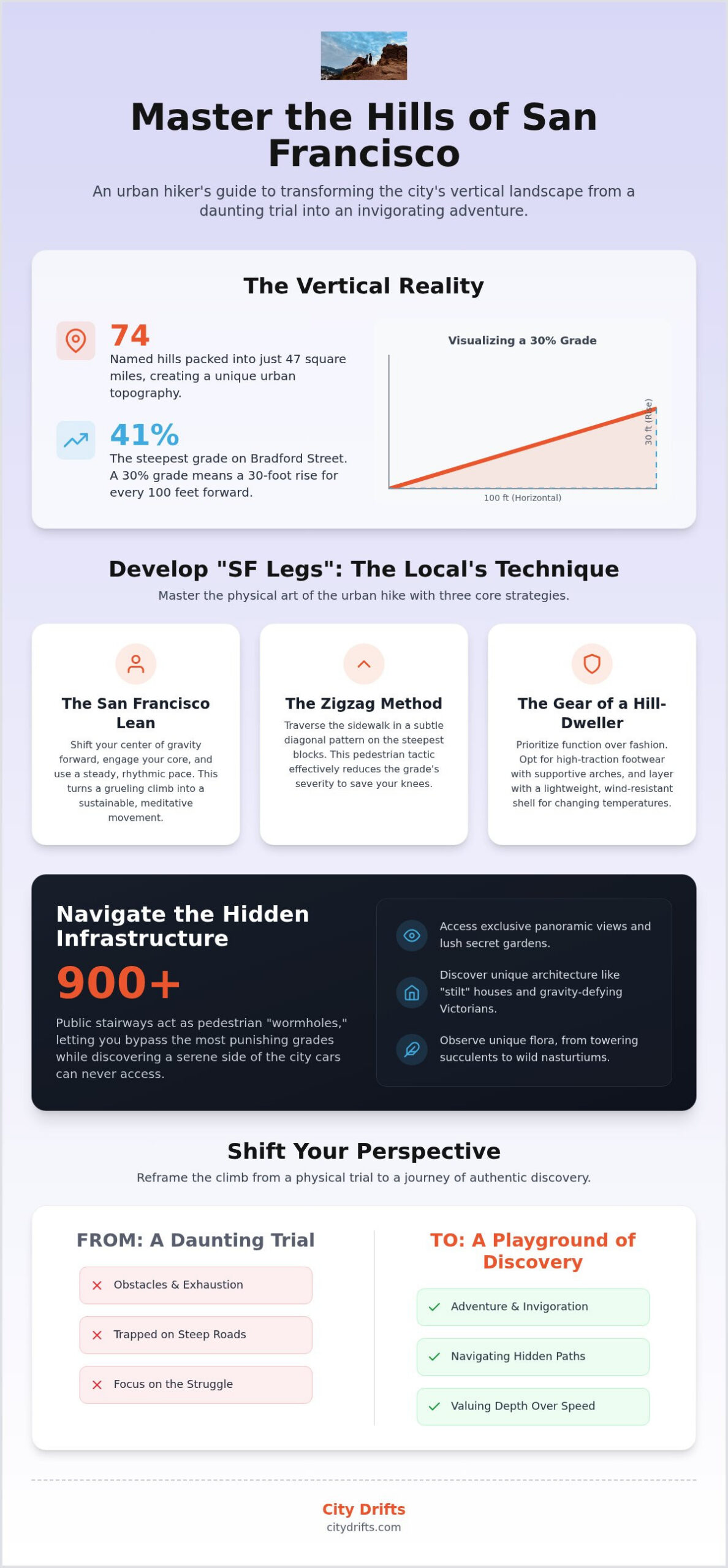
To understand the local rhythm, you must first respect the incline. While visitors might gasp at the sight of a 30% grade, residents have developed a specific physical response known as the “San Francisco Lean.” This posture involves shifting the center of gravity forward, engaging the core, and maintaining a steady, rhythmic pace that prioritizes endurance over speed. When asking how do San Francisco natives manage the city’s hills, the answer often lies in this mechanical efficiency. It’s a method that turns a grueling ascent into a sustainable, almost meditative movement.
To better understand this concept, watch this helpful video:
Understanding how do San Francisco natives manage the city’s hills also involves a psychological shift. Locals treat these inclines as a defining feature of their environment, not a bug in the urban design. When faced with the steepest blocks, such as those found on Filbert or 22nd Street, seasoned walkers employ the “zigzag” method. By traversing the sidewalk in a subtle diagonal pattern, you effectively reduce the grade’s severity. It’s a quiet, pedestrian tactic that saves the knees and preserves energy for the summit.
Decoding the Topography
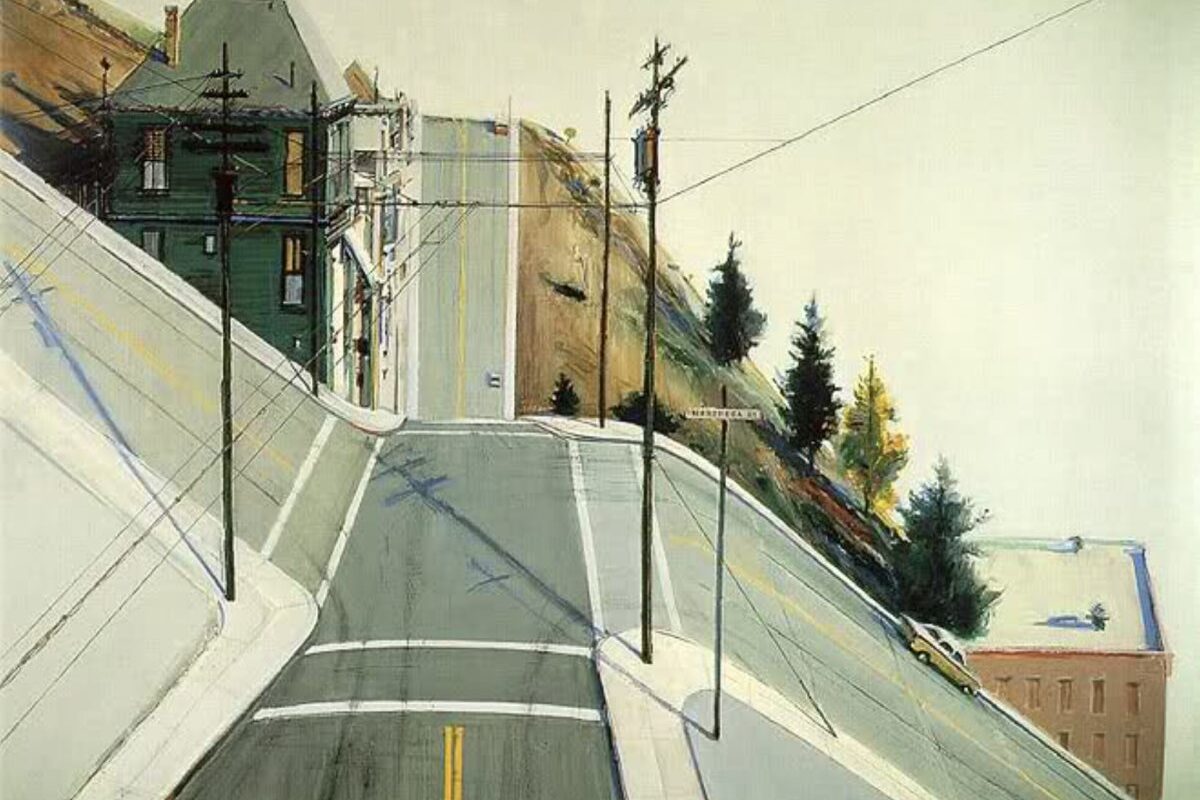
The topography of San Francisco is a complex tapestry of 74 named hills packed into 47 square miles. A 30% grade means the street rises 30 feet for every 100 feet of horizontal distance. Because the city was laid out on a rigid grid system regardless of the terrain, many streets ignore natural contours. This creates the famous “rollercoaster” silhouettes where the pavement seems to drop off into the bay. Locals learn to distinguish between these direct grid climbs and the more forgiving contour paths that wind around the peaks.
The Gear of a Hill-Dweller
Mastering the terrain requires specific equipment. Fashion in the city is famously subservient to function, particularly regarding footwear. High-traction soles and supportive arches are the standard; high heels are a rare sight on residential sidewalks. Layering is equally critical. A hill-top wind can drop the temperature ten degrees in a single block, making a lightweight, wind-resistant shell a non-negotiable part of the urban hiker’s kit. This practical approach ensures that the physical exertion remains a joy rather than a chore.
The Hidden Infrastructure: Navigating the Secret Stairway Network
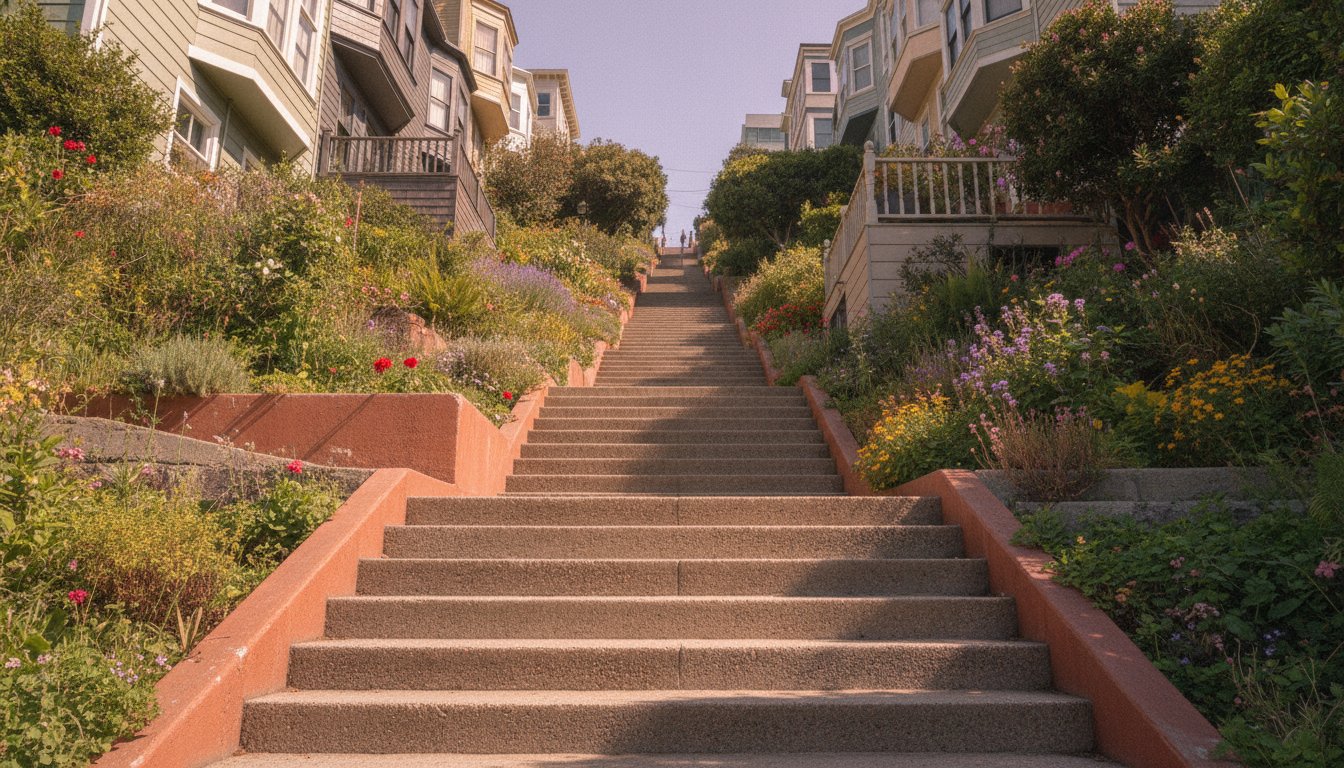
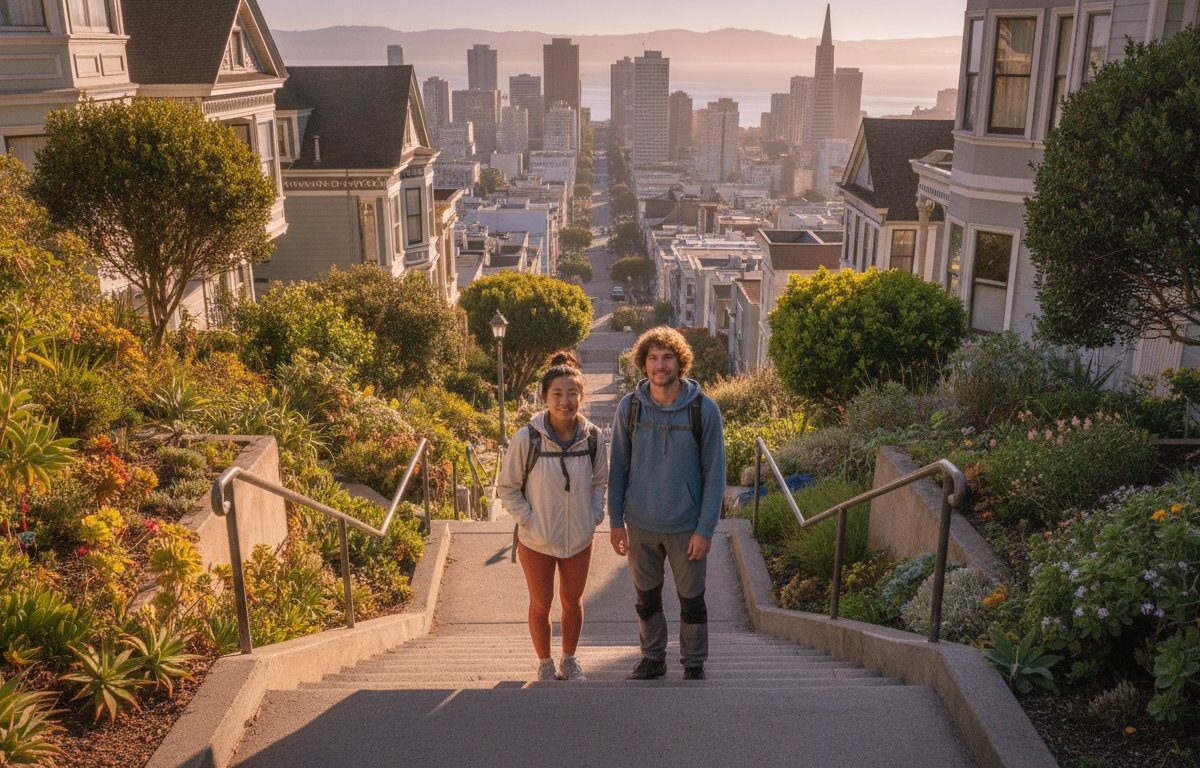
The paved streets of San Francisco often present a brutal, direct challenge to the legs. However, the true secret of the city lies in its vertical shortcuts. How do San Francisco natives manage the city’s hills without succumbing to the steep residential grids? They use the city’s hidden infrastructure. With over 900 public stairways tucked between houses and parks, these paths function as pedestrian “wormholes.” They allow you to bypass the most punishing grades while offering a serene, residential backyard experience that cars can never access.
Regularly traversing these inclines provides the same physical and mental benefits of hiking found in deep wilderness, yet it happens right in the heart of the city. This network is more than a shortcut; it’s a curated gallery of urban life that rewards the observant walker with quiet exclusivity.
Beyond the Filbert Steps
While the Filbert Steps are legendary, the city is filled with lesser-known gems. The 16th Avenue Tiled Steps, for instance, showcase vibrant community art through intricate mosaic work. Walking these paths often feels like a breach of privacy, as they wind through lush secret gardens and past the front doors of secluded homes. Understanding how do San Francisco natives manage the city’s hills requires looking past the asphalt to these public rights-of-way. They harbor unique flora, from towering succulents to wild nasturtiums, that thrive in the microclimates of the hillsides.
Architecture at an Angle
Navigating these stairs offers a curated view of local architecture. Building on a 30-degree slope requires ingenuity, resulting in “stilt” houses and cantilevered Victorian silhouettes that seem to defy gravity. These hanging gardens and modern glass structures are often invisible from the main thoroughfare. You can experience these hidden perspectives firsthand on one of our Stairway Walks, which turn a simple transit route into a cultural study. Moving through these spaces reveals how the city’s builders embraced the vertical landscape rather than fighting it.
Respect is the currency of the stairway. Because these paths are essentially the front yards of local residents, maintaining a quiet, observant presence is essential. Avoid loud conversations and stay on the designated paths. This mindful approach ensures these secret connectors remain a peaceful refuge for both the traveler and the inhabitant.
Developing “SF Legs”: The Physical Art of the Urban Hike
San Francisco functions as a 47-square-mile open-air gymnasium. While a visitor might see a 30% grade as a barrier, a local sees a high-intensity interval training session. How do San Francisco natives manage the city’s hills with such poise? They embrace the concept of incidental exercise, where the daily commute becomes a series of cardiovascular challenges that build endurance over time. This consistent movement offers profound health benefits of walking, including improved heart health and mental clarity. By treating the incline as a feature of a healthy lifestyle, residents develop the legendary “SF legs” that make even the steepest residential blocks feel manageable.
The Morning Ritual
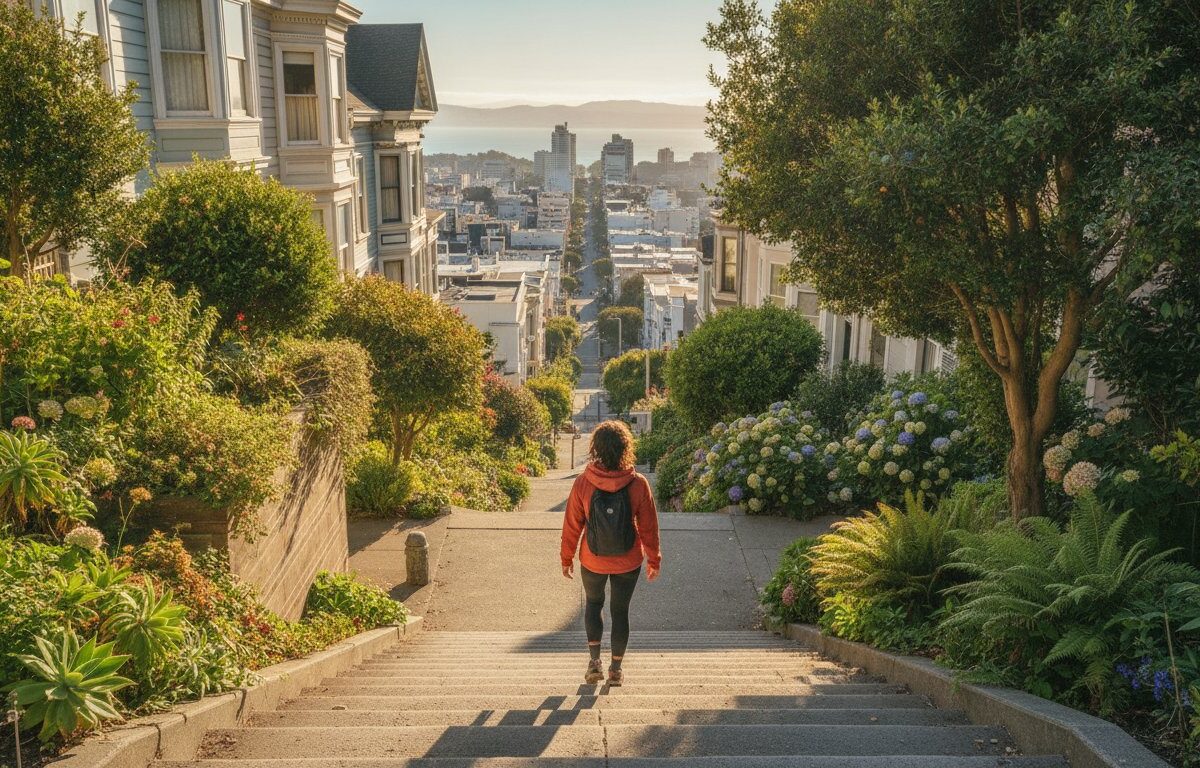
For many, the day begins with a sunrise summit. Reaching a peak like Corona Heights or Tank Hill before the workday starts provides a unique sense of perspective. At City Drifts, we believe that fitness should feel like a discovery rather than a chore. Our philosophy centers on the idea that the physical exertion of a climb is always balanced by the intellectual reward of a new story or a hidden architectural detail. It’s about moving with purpose and seeing the city as a living, breathing landscape that rewards the bold.
Pithy Tips for the Steepest Climbs
Mastering the vertical grid requires more than just muscle; it requires a strategy. The secret to how do San Francisco natives manage the city’s hills often involves a marathon mindset rather than a sprint. Consider these native tactics for your next urban hike:
- The Visual Anchor: Don’t look at the top of the hill. Focus on your shoes or a point ten feet ahead to avoid the mental fatigue of a long haul.
- The Recovery Block: Use the flat intersections between steep grades to catch your breath and reset your pace. These are vital reprieves in a vertical world.
- The Scenic Deviation: If a straight path is punishing, look for a nearby stairway. The winding nature of these paths often provides a more ergonomic and visually stimulating ascent.
Every great climb deserves a reward. Whether it’s a panoramic vista of the Golden Gate Bridge or a quiet espresso at a neighborhood cafe, the summit is only half the experience. The satisfaction of uncovering a hidden view makes the physical effort worthwhile. If you’re ready to transform your struggle into a curated journey, book one of our Neighborhood History Tours today and master the hills like a professional.
From Commute to Discovery: Why We Turn the Climb into a Tour
While mastering the rhythmic pace of a steep ascent is a personal milestone, there’s a profound difference between surviving a climb and truly seeing the neighborhood. Many visitors struggle with the logistics of the vertical grid, often getting lost in residential mazes or sticking to crowded main roads that offer little in the way of character. How do San Francisco natives manage the city’s hills while uncovering the best local stories? They often turn the physical challenge into a curated exploration. A guided urban hike reveals architectural nuances and historical layers that remain invisible from the window of a bus or a car.
A local curator acts as a bridge between the physical exertion of the path and the narrative of the landscape. Navigating “impossible” residential paths requires more than just a map; it requires an intuitive understanding of how the city’s stairs and alleys connect. By choosing a guided format, you shift the focus from the burn in your calves to the beauty of a hidden Victorian facade or a secluded community garden. It’s an approach that values depth over surface-level sightseeing.
The City Drifts Experience
Our curated walks offer a refreshing perspective on the city’s topography. We move beyond the typical tourist corridors to provide a “backyard” view of San Francisco’s most iconic districts. These journeys are designed to be social and invigorating, bringing together a community of fellow explorers who value authentic discovery. You’ll experience the physical vitality of an outdoor pursuit without the frustration of getting lost. It’s about seeing a familiar environment through a refined, localized lens that respects both the history and the geography of the land.
Planning Your Urban Adventure
A City Drifts tour is a balanced experience. We carefully manage the elevation and pace to ensure the journey remains challenging yet accessible. You can expect a steady cadence that allows for quiet contemplation of the architecture and the natural landscape. One of our signature features is the “Restaurant Reveal.” We believe every great climb deserves a reward, so we conclude our hikes at local favorites where you can reflect on the journey. This transition from physical movement to culinary discovery completes the cycle of urban exploration.
If you are ready to see the city through a refined, localized lens, Join our next urban hike and master the hills like a native. We have done the legwork to find the most rewarding paths, offering you a sense of mastery over the local terrain while you uncover the stories that define our vertical home.
Elevate Your Urban Journey
Mastering the topography of San Francisco is an art that combines physical rhythm with an observant eye. You’ve learned that the secret to the city’s vertical landscape lies in shifting your perspective from the rigid paved grid to the hidden network of stairways winding through residential backyards. By adopting the “SF Lean” and utilizing the shortcuts known only to locals, you transform a daunting climb into a curated exploration of architecture and history. Understanding how do San Francisco natives manage the city’s hills allows you to move with the quiet confidence of an urban curator rather than the frustration of a visitor.
Ready to put these strategies into practice? Book an Invigorating Stairway Walk with City Drifts to experience the city from its most exclusive vantage points. Our expert guides specialize in the secret shortcuts that avoid the crowds, leading small groups through routes designed for both fitness enthusiasts and photography lovers. You’ll gain a sense of mastery over the local terrain while uncovering the stories that define our vertical home. The summit is waiting, and the view is always better when you’ve earned the perspective.
Frequently Asked Questions
How do you walk up San Francisco hills without getting tired?
Mastering the incline requires a steady, rhythmic cadence and the forward-leaning posture known as the “San Francisco Lean.” Instead of sprinting, shift your center of gravity forward and engage your core to maintain momentum. Use the flat intersections between steep blocks as natural recovery zones. This methodical approach is the core of how do San Francisco natives manage the city’s hills, as it prioritizes endurance over speed and prevents physical burnout.
What are the steepest streets in San Francisco to avoid (or conquer)?
Bradford Street above Tompkins holds the record for the steepest grade at 41%. Other formidable inclines include Romolo between Vallejo and Fresno at 37.5% and Prentiss between Chapman and Powhattan at 37%. These blocks are significantly steeper than the famous tourist stretches on Filbert or Lombard. Navigating them requires high-traction footwear and the “zigzag” tactic, where you traverse the sidewalk diagonally to effectively reduce the grade’s severity.
Do I need special hiking boots for a San Francisco walking tour?
Dedicated hiking boots aren’t strictly necessary, but supportive, high-traction footwear is essential for your comfort. Opt for athletic shoes or walking boots with a reliable grip to handle steep concrete and occasional damp stairways. Most locals prioritize arch support over aesthetics when traversing the residential grids. Proper soles ensure stability on the 30% grades found in neighborhoods like Noe Valley, where the pavement can feel surprisingly slick after a morning fog.
Is it better to walk or take the bus for steep hills?
Walking offers a level of authentic discovery that public transit cannot replicate. While the bus is efficient for long distances, it often bypasses the hidden stairways and quiet gardens that define the local experience. Walking allows you to control your pace and stop for panoramic vistas at your leisure. When considering how do San Francisco natives manage the city’s hills, the answer often involves using transit for the approach and walking for the final, scenic ascent.
How many stairways are there in San Francisco?
San Francisco is home to over 900 public stairways according to recent pedestrian surveys. These paths serve as vital connectors within the city’s vertical infrastructure, often acting as the only link between residential streets at different elevations. From ornate, community-tiled steps to narrow, wooden paths tucked behind private backyards, these stairways offer a unique way to navigate the topography while avoiding the noise and traffic of the main thoroughfares.
What is the best time of day for an urban hike in SF?
Early morning is the ideal time for an urban hike to capture the city’s striking clarity before the afternoon fog rolls in. The sunrise provides a unique perspective on the Victorian architecture and the shimmering bay surface. Early hours also ensure a quieter, more exclusive experience on the popular stairway paths. This timing aligns with the local morning ritual of seeking physical vigor and mental perspective before the workday begins in the valleys below.